Former US Defense Secretary of Defense William Perry has called for the nuclear land-based force of 450 Minuteman missiles to be eliminated. His reasons for his recommendation appear to be two-fold.
First, that Russia's current reckless and cavalier attitude about the early use of Russian nuclear weapons might cause an American president in a crisis to launch Minuteman missiles out of fear that Russia might pre-emptively launch a first strike against America's "vulnerable" missile silos. And second, that modernizing Minuteman would start an arms race with Russia.
Both rationales are without merit.
First, the US is not in an arms race with Russia — a competition Dr. Perry fears would be fueled by going forward with the Minuteman. America's strategic (long-range) forces happen to be limited, as are those of Russia, by the 2010 New Start Treaty. between the two superpowers. Strategic nuclear warheads are capped at 1,550. If anything, Russia is rapidly modernizing, ostensibly within those limits, while the United States is trying — slowly — to catch up.
The last time the US modernized the Minuteman force was between 1993-2008. Then, under the START I and the Moscow treaties, deployed US nuclear weapons were reduced from roughly 12,000 to 2,200. During that entire period, Minuteman modernization served a stabilizing role, and was fully compatible with arms control, as remains true today.
Second, the Minuteman missile force is not in any way in danger of being launched or used recklessly or inadvertently. The nuclear force the US now maintains consists of:
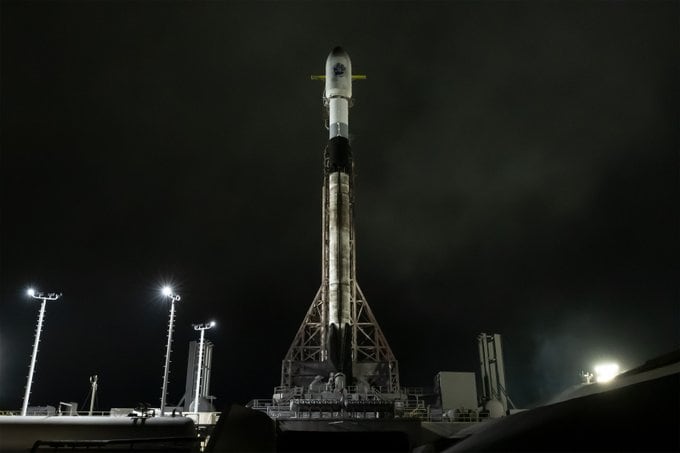
• 450 silo-based land-based missiles and their associated launch control centers.
• 60 nuclear-capable bombers at three bases.
• 14 deployed nuclear submarines each at two additional bases, of which four to six 4-6 are at sea at any one time.
These make America's early use of nuclear weapons in a crisis unnecessary. Why? The US nuclear force, including a robust ICBM fleet, cannot as a whole be eliminated in a first strike by an adversary without prompting a massive US retaliation. retaliatory strike in return. As noted, there are more than 500 ICBM-related American nuclear targets spread over five extremely large Western states, plus submarines in the vast expanse of the Pacific and Atlantic oceans. An adversary would have to eliminate all of these forces in a first strike , all of these forces would have to be eliminated simultaneously by an adversary to prevent the US from being able to launch a devastating response.
The third point is that if the current Minuteman force were eliminated through obsolescence or attrition, ironically the very international instabilities feared by Dr. Perry, such as a Russian leader using nuclear weapons in a crisis, would emerge in a dramatic fashion.
But if that is true, it seems that the United States, without a Minuteman force, would make it easy — in fact tempting — for an adversary such as Russia to take out the entire US strategic nuclear force in one or a series of very limited, even surreptitious, first strikes.?
Under Secretary Perry's proposal, the US "target set" of nuclear submarines and bombers would consist of five military bases: three for bombers and two for submarines, and a handful of submarines at sea. That is it: from over 500 targets today to fewer than 10 in the future. It would be as if the US nited States painted a bulls-eye on its nuclear forces and told our enemies, "Come and get us." The impact on strategic stability would be obvious.
In short, From the perspective of maintaining deterrence, strategic stability, the ability to be effective during a crisis and using defense dollars wisely, the Minuteman force is an extraordinary asset, a required modernization and critical to the security. of our country and allies.
To sum up, Perry’s recommendation on land-based missiles is dangerous, wrong-headed and will lead to the very destabilizing relations with Russia he is hoping to avert.
Peter Huessy is president of his own defense consulting firm, GeoStrategic Analysis, a founded in 1981,and was the senior defense consultant at the National Defense University Foundation for 22 years. He is a national security fellow at the American Foreign Policy Institute AFPC, and senior defense consultant at the Air Force Association.