Pullquote: With its comprehensive military capacity in the South China Sea, China is not afraid of a military showdown in this area.
Web Hed: China Protects Its Neighborhood
As the largest developing country and an emerging political and economic power, China is playing an increasingly more and more important role in the international arena.
In terms of its the path of China's rejuvenation, neither does China follows neither the power politics of the West in implementing its diplomacy, nor does it confine itself in the rigescent manner of ideology politics of the 20th century. It returns to the tradition of Chinese civilization via a "Great Reverse of History." It is the path that China followed in 2015 when it and played a significant and active role in the international community through a variety of diplomatic activities.
The emerging China is playing a positive role on the global stage as a responsible power. The basis of Chinese of its diplomacy is founded on the current international order. China is not a revisionist of the current international order, instead, employing attempting through "improvement diplomacy," China has instilled equity and just ideas and norms to make the current international order more benign and reasonable.
Hence, at the UN conference in New York in commemorating the end of World War II in New York, the headquarters of the UN, President Xi Jinping explicitly emphasized China would like to continue to uphold the international order and system underpinned by the purposes and principles of the UN Charter. To maintain the current international order laid down since WW II is obviously the foundation fundamental support of China's diplomacy.
As a big Asian nation, a priority of China's diplomacy has been to strengthen the friendly cooperation with neighboring countries. has been the priority of China's diplomacy. The proposition of "One Belt, One Road" has endowed China's neighboring policy with a new connotation. China's neighboring foreign policy contains the four circles of East Asia, Central Asia, South Asia and North Asia, as well as two big neighboring regional frameworks of the Pacific and Asia.
In 2015, the Chinese government promoted bilateral comprehensive cooperative partnerships with its neighbors ing countries through visits to countries including Pakistan, Kazakhstan, Vietnam, Singapore and South Korea.
At the same time, through regional multilateral platforms, China is making great efforts to promote in promoting regional integration. process. In July, at the Shanghai Cooperation Organisation's Council of Heads of States meeting held in Russia, Xi urged Jinping tried hard in propelling the member states to make a common decision to connect of connecting and cooperating of "The Silk Road Economic Belt" with each nation's development strategy and the Eurasian Economic Union.
With Prime Minister Li Keqiang participating, leaders from China, Japan and South Korea 's leaders' met eeting mechanism held in Seoul, thus providing significant impetus for East Asia cooperation. Furthermore, he attended East Asia leaders' meetings in Malaysia, and promoted an economic integration process based on dual-wheeled by development and security.
Later, Xi Jinping attended the Asia-Pacific Economic Cooperation APEC summit in Manila and actively promoted the construction of an "Asia-Pacific Community of Common Destiny," and the implementation of a the consensus of "Free Trade Area of the Asia-Pacific."
This year, through a series of diplomatic efforts, the Chinese government has made actively tried to cool and effective endeavor for the cooling of hot-spot issues. Under China's coordination, a comprehensive Iran nuclear issue agreement has been reached. The resumption of high-level visits between China and North Korea effectively calmed prevented the tense relations. likely caused by the severe event in the peninsula. The realization of A meeting between the leaders of China and Japan alleviated the tense situation in the East China Sea.
There is one point worth mentioning: , that is, The South China Sea situation became more complicated due to the direct intervention of the US. China expressed the position that it wasin protecting its own maritime rights and interests on various occasions. Meanwhile, through cautious self-constraint, China successfully prevented the upgrading of the tense situation in the South China Sea from worsening.
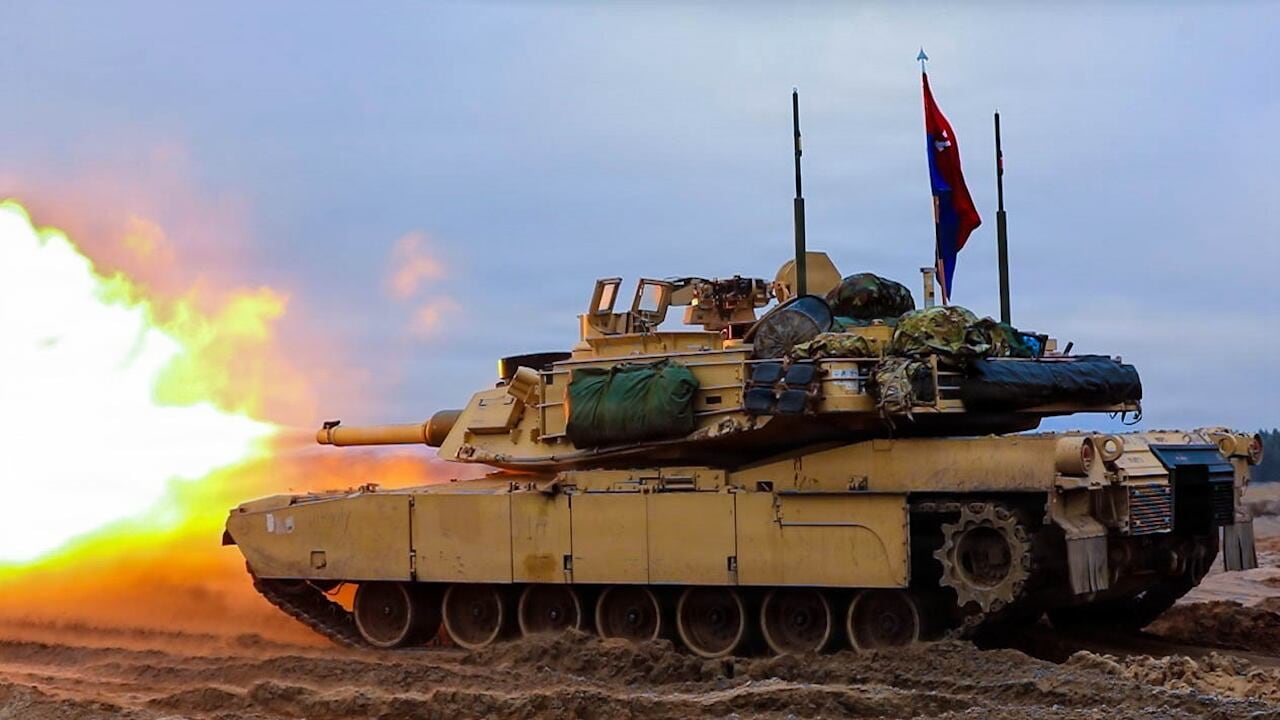
It should be noted that the entry of the destroyer US nited States Pacific Fleet USS Lassen from the US Pacific Fleet of into waters near relevant islands and reefs of China's Nansha Islands is an intended provocation. With its comprehensive military capacity in the South China Sea, China is not afraid of a military showdown in this area. However, to protect the friendly cooperation between China and the US and the overall peaceful, and stable overall situation, China tactfully conveyed its determination to protect in protecting its own interests while preventing , at the same time prevented the occurrence of friction.
As for the land reclamation projects on China's Nansha islands, they will lay a foundation for China to provide international public goods in dealing with non-traditional security challenges in the South China Sea.
Following the On the basis of general situation of peace and stability in 2015, next year China's diplomacy will probably have the following focuses:
First, promoting a consistent focus on the promotion of the strategic connectivity along the route of "One Belt, One Road."
Second, to stabilize the overall situation of peaceful situation and stability in neighboring countries and make cautious responses to the possible complex situation in the South China Sea. It's necessary that for China to be prepared in sophisticated ways for the further provocation by of the US in the South China Sea. It's more important for China to encourage propel the concerned parties to continue carry on negotiations over a code of conduct on COC based on the reality in this area and to explore the possibility for the claimants' cooperation in the South China Sea.
Third, to further promote the stable state of US-China relations and coordination with other powers.
Fourth, to boost good global governance processes under the framework of transregion and interregional cooperation.
Hao is professor/director of the Center for Strategic and Peace Studies at China Foreign Affairs University.



Featured Video