WASHINGTON and PARIS – With an uptick in chaos from North Africa to the southern tip of the Arabian Peninsula, prospects are good for defense discussions and deals at IDEX 2015, analysts say.
Hot topics on the floor and on the sidelines of the International Defence Exposition and Conference, which runs Feb. 22-26 in Abu Dhabi, will include counter-terrorism, risk and crowd control, homeland security, missile defense, and combat equipment for high-level conflict, according to Theodore Karasik, a Dubai-based senior adviser at Risk Insurance Management.
Even the recent slide in the price of oil is not expected to much dampen the region’s appetite for imported weapons and military gear.
“The appetite is there,” Karasik said. “The funding will be found.”
While countries in the region have been adding to their defense stocks for several years, the conversations at this year’s show will be shaped by the changes of the past few months.
One of the region’s powerhouses, Saudi Arabia, faces uncertainty on both its southern and northern borders. The January fall of Yemen’s government to Houthi rebels concerns the Sunni Saudis, who see the Shia rebels as an Iranian-backed force and thereby a threat to King Salman, who assumed power in Riyadh just weeks ago. To the north, Islamic State fighters have already hit at least one border checkpoint between Saudi and Iraq.
What’s more, the ramped-up air war in Iraq and Syria against Islamic State militants has been chewing through munitions and adding flying hours to the combat and air-refueling aircraft of several regional militaries. As of Feb. 5, the coalition fighting against the Islamic State group — among them, Bahrain, Jordan, Saudi Arabia and the United Arab Emirates — had conducted 2,276 airstrikes against Islamic State targets in Iraq and Syria, with non-US warplanes striking 356 targets in Iraq and 79 in Syria.
And even if most of the munitions are being dropped by US aircraft, which had hit 895 targets in Iraq and 946 in Syria as of Feb. 5, allied warplanes are flying in support even when not hitting targets themselves. The following day, Feb. 6, the Jordanian Air Force struck targets in Al Hasakah, Syria, dropping 72 munitions on storage and staging facilities in retaliation for the grisly murder of its downed pilot in Syria.
Meanwhile, the United States and Iran are in what may be the final weeks of delicate negotiations over Iranian nuclear ambitions, talks that may help determine whether Iran fields nuclear weapons and alters the regional power balance.
The bottom line is that many eyes will be watching the goings-on at the Abu Dhabi National Exhibition Centre.
“IDEX will be an important indicator for customer sentiment,” said Roman Schweizer, aerospace and defense policy analyst at Guggenheim Securities. “There is tremendous uncertainty in the regional security environment, not to mention growing demand and uncertainty in Asia and India.”
Oil and the Global Economy
By Reuters’ calculations, the price of oil plunged 60 percent from $115 to nearly $45 a barrel in January before rebounding to $58 in February. Yet the sovereign wealth funds long nurtured by petrochemical revenue give countries flexibility even when oil and gas prices are low.
In their late-January earnings calls, the US defense prime contractors all said that they had not yet seen any indication that the sharp drop in crude oil prices was affecting interest in US weapons and equipment among regional clients.
“I wouldn’t expect any quick gyrations or snap decisions on a lot of these deals” that are in the works, Schweizer said. “Most of them are major procurements that take years to pull together, so a short-term crude oil price dip should not have a sustained impact.”
And given the disparate and fluid threats, there are no real indications that the Gulf Cooperation Council countries will take their focus off of security issues. Even if oil prices remain low throughout the year, causing countries to eat into their rainy-day funds, changes to current defense procurement plans and programs would probably manifest as delays, not cancellations.
Karasik noted that the lengthy procurement cycle for defense equipment means governments could bet on a future oil price rise. But purchases of off-the-shelf homeland- and border-security kit is quicker, so governments and militaries will take that into account.
Byron Callan, director at Capital Alpha Partners, agreed that in the near term, low oil prices may cause some programs not currently under contract “to slip to the right.”
But he said that the region’s decisions were only part of a larger picture.
“It’s a global economic phenomena with slower growth in Europe and Asia,” Callan said, so if growth continues at this slower pace, he would expect the defense market to be affected globally. “I think the debate here is that they need a rate of growth in the market” to continue with big defense buys, he said.
For the gulf states, the timing of fighter modernization is among the largest of defense-procurement decisions.
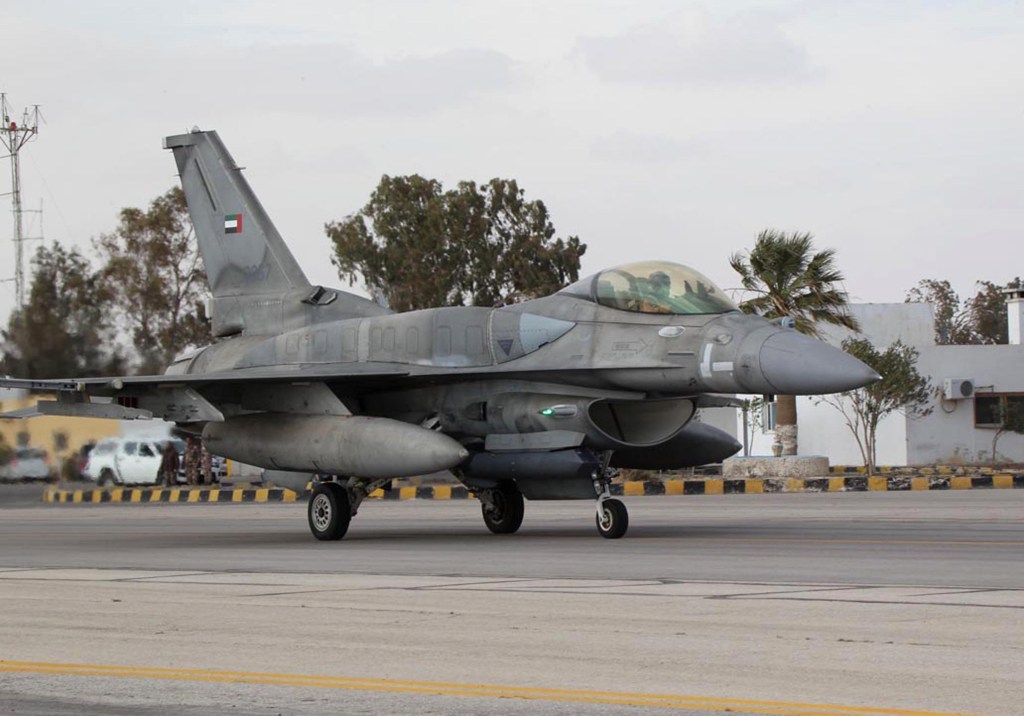
“The UAE has recently sent F-16s to Jordan and Egypt for use in Libya, so there’s an assertiveness and a competency developing in these militaries” that should affect long-term spending, Callan said.
As well, the US State Department announced Feb. 3 a memorandum of understanding with Jordan that will increase annual US military assistance from $660 million to $1 billion through 2017. While that number in itself is unlikely to have a huge impact on the defense market it does represent a significant capability upgrade for the Lebanese military. On Feb. 8, US diplomats said, the United States delivered to Lebanon military equipment worth more than $25 million, including 70 M198 howitzers and almost 26 million rounds of ammunition.
Big Players
France, which upped its game last year in North Africa and the gulf to be a premier supplier of defense equipment, will look to continue its efforts at IDEX.
In particular, France and Saudi Arabia collaborated to offer a $3 billion grant to help Lebanon equip its Army to fight Islamic State jihadists along its increasingly contested border with war-torn Syria. France has been flying airstrike missions of its own against Islamic State targets in Iraq, and also intervened in Mali and the Central African Republic to protect those governments from insurgents.
Meanwhile, France has been in talks to sell the Dassault Rafale fighter jet to Egypt, Qatar, Kuwait and the UAE. French Defense Minister Jean-Yves Le Drian said recently that “fairly advanced” discussions with Egypt on the Rafale were continuing.
“I hope it will get done,” Le Drian said in the Feb. 8 interview, conducted by Europe 1, Le Monde and I Télé.
Egypt is also in detailed negotiations with France to buy a multimission frigate.
As well, Chinese companies have booked stands at IDEX, which offers a chance to sell their military equipment into “various regions,” Callan said, even though European nations and the US have observed an arms embargo against China since the deadly shootings in Tiananmen Square in 1989.