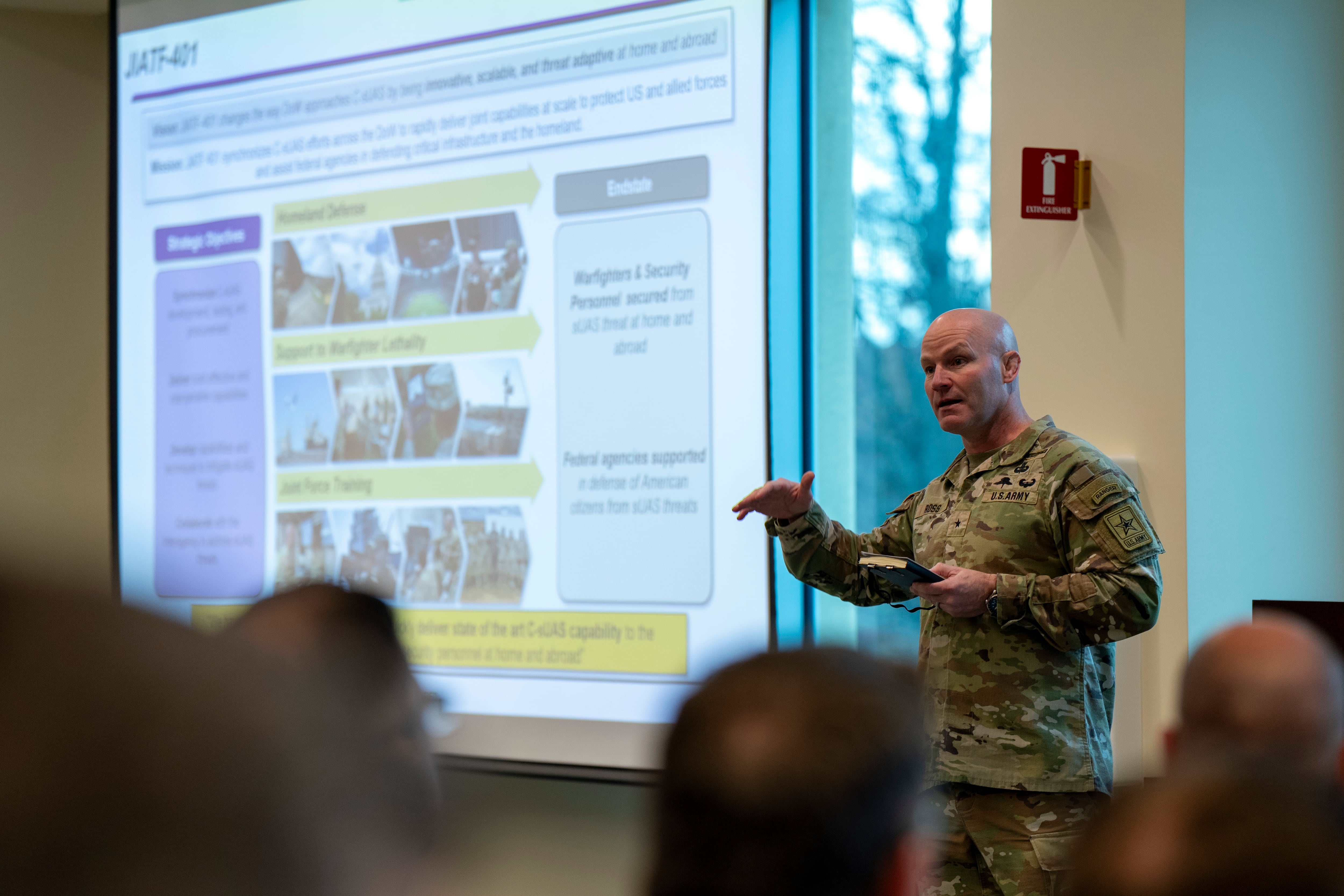
The Joint Interagency Task Force 401, established by the Pentagon as the military’s lead counter-drone organization, plans to share data with the Golden Dome missile defense project to defend against threats from larger drones, U.S. Army Brig. Gen. Matt Ross, director of JIATF 401, said at a media roundtable Friday.
“Our integrated counter-UAS posture across the homeland has to be tied into the Golden Dome and we’re going to make sure that it is,” Ross told reporters.
Data sharing between JIATF 401 and the Golden Dome effort will focus on drones classified as belonging to Group 3, Ross explained. Drones categorized in that size are around the size of the Army’s RQ-7B Shadow and carry heavier payloads.
Ross said he is currently discussing data sharing with Space Force Gen. Michael Guetlein, head of the Golden Dome project.
“We have to be able to share data seamlessly so we should be able to see each other’s threat picture,” Ross told Defense News. “Just because you have the ability to see that data or share that data doesn’t mean you have to at each location.”
Layered defenses
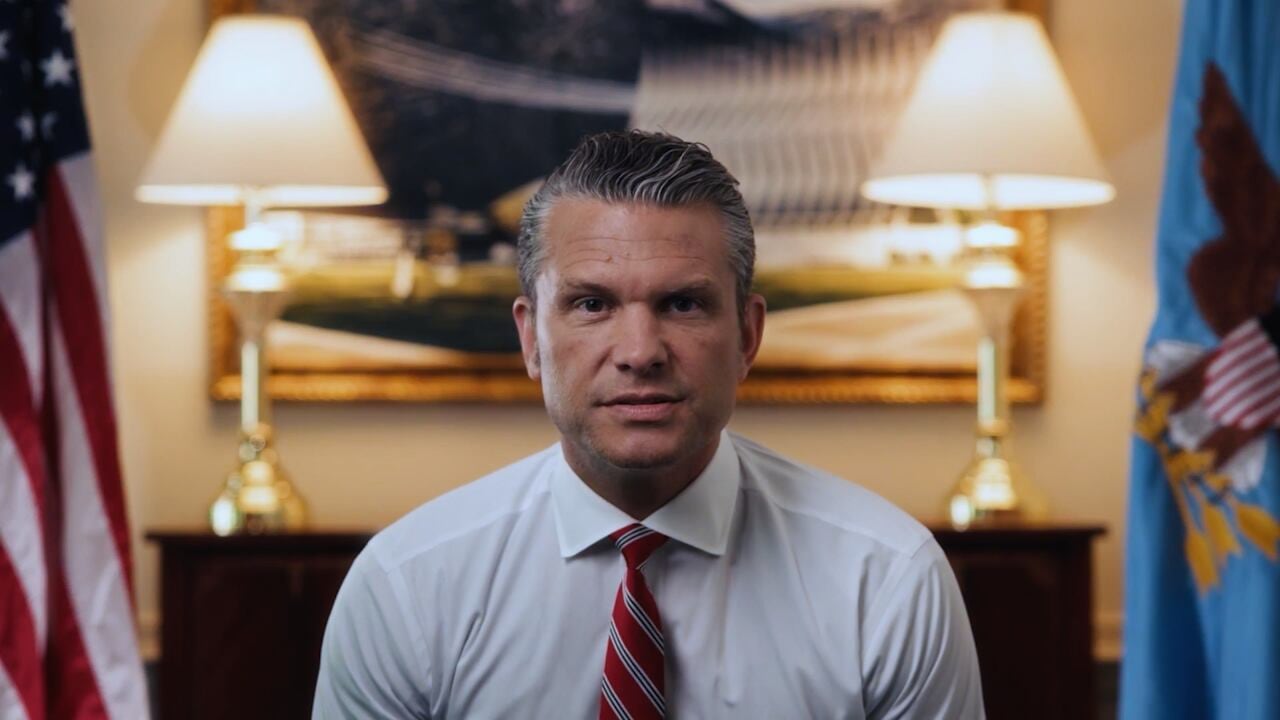
JIATF 401 was established in August by Defense Secretary Pete Hegseth to ensure that all U.S. military branches are equipped with counter-UAS defense capabilities.
Describing the threat of small unmanned aerial systems as “the defining threat of our time,” Ross said that a multilayered defense infrastructure is necessary to defeat those threats.
“Our formations must be able to detect, track, identify and defeat these systems anywhere on the planet,” Ross said. “This requires us to layer our defenses by integrating sensors with kinetic and nonkinetic efforts and battle management systems into a responsive, interoperable network.”
JIATF 401 has already assessed counter-drone capabilities across all U.S. military service branches and is providing counter-drone capabilities to forces at home and overseas, he said.
Small system threats
Ross noted that while many defense systems exist to defeat Group 3 drones, more work remains to be done in protecting service members and the public from threats by small drones, which fall under Groups 1 and 2.
“I want to make sure that we have just as robust protection against Group 1 and Group 2 systems that are smaller and much more likely to be seen over a lively attended gathering, stadium or a watch party specifically for the World Cup,” Ross said. Next year’s FIFA World Cup will see soccer matches held in 11 major metropolitan stadiums across the United States, which will host games along with Canada and Mexico.
In the event of a drone attack on U.S. soil, the Department of Homeland Security and local law enforcement would lead the response, Adam Scher, spokesperson for JIATF 401, told Defense News.
“If requested, the [Pentagon] could serve in a support capacity in many of the same ways we have previously,” Scher said.
“The JIATF is not an operational command, and our support to these events comes from our partnerships and our data sharing,” Scher said, adding that the task force shares threat information and works to streamline and support counter-drone activities with interagency partners and other authorities.
Border cooperation
Amid an uptick in drone activity along the U.S.-Mexico border and cartels increasingly adopting drone tactics used in Ukraine, JIATF 401 is currently working to perform threat assessments along the southern border, Scher told Defense News.
The task force is cooperating with other agencies and commands, including U.S. Northern Command and federal and tribal law enforcement agencies, to gather and share data about threats posed by drones in border areas.
The task force is also working with commanders of military installations to ensure that they have everything they need to guard bases and personnel from emerging drone threats of all types.
“We are going to help ensure they have clear guidance on what constitutes a threat, and we are going to make sure they are equipped with the best tools our industry can offer,” Scher said.
Zita Ballinger Fletcher previously served as editor of Military History Quarterly and Vietnam magazines and as the historian of the U.S. Drug Enforcement Administration. She holds an M.A. with distinction in military history.