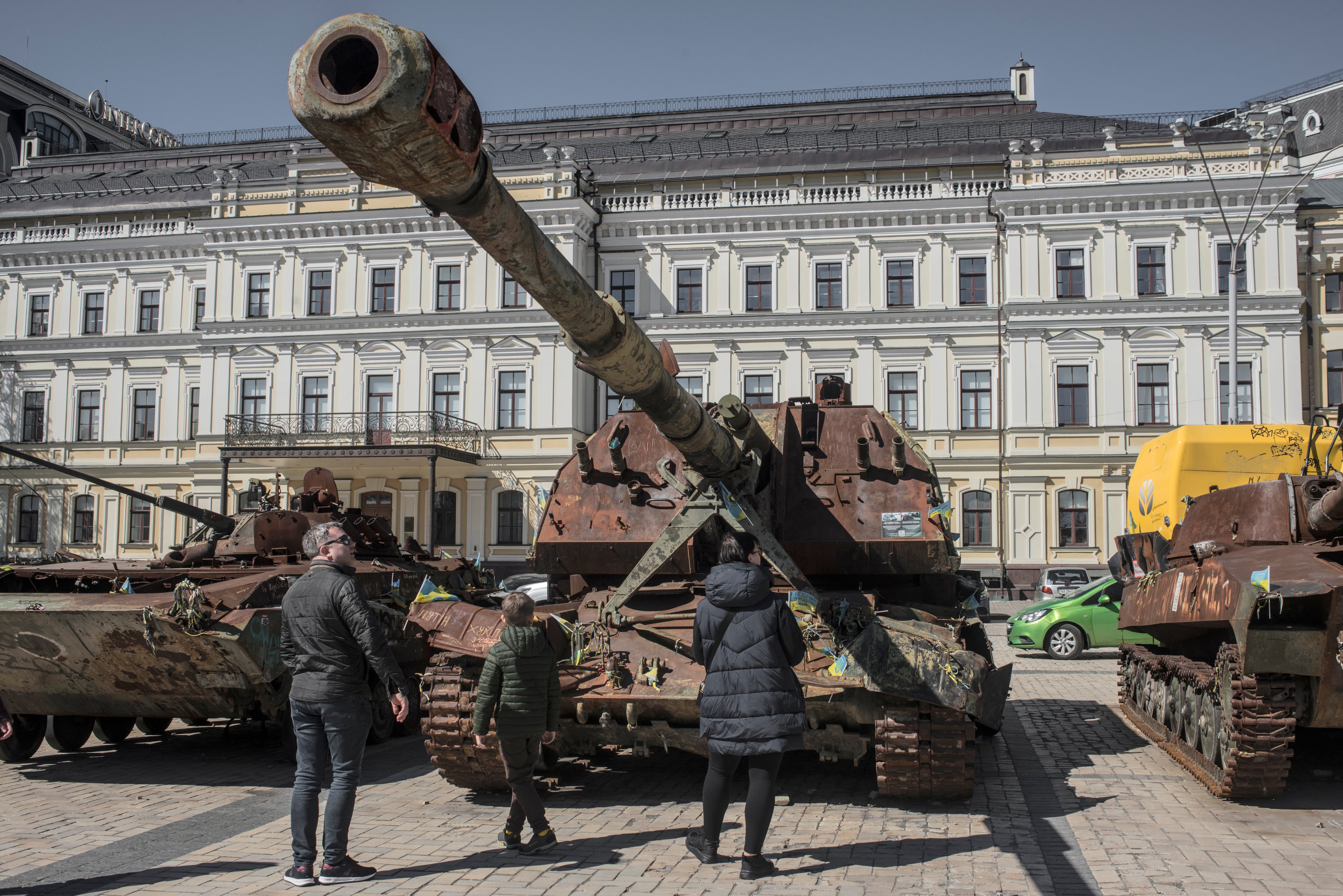
VIENNA — Ukraine’s Ministry of Defense launched an access-controlled online platform last week that provides allied governments, defense companies and research institutions with technical intelligence drawn from captured Russian military hardware − a formalization of what Kyiv has long done informally with select partners.
The snazzily branded platform, called TrophyLab and accessible at trophylab.mod.gov.ua, currently catalogs more than 115 samples of seized Russian equipment across 79 categories. Users who pass a vetting process gain access to blueprints, component analyses, schematics, and the findings of Ukrainian state laboratories and intelligence agencies − more than 225 studies at present, according to the ministry.
Defense Minister Mykhailo Fedorov announced the launch on social media Thursday, framing the platform as a strategic tool for “the entire civilized world.” Among the listed items available for study are, for example, a Kinzhal hypersonic missile and a T-90M tank.
RELATED
“Every missile, drone and vehicle seized on the battlefield is now a source of knowledge for the free world,” Fedorov wrote.
Beyond digital access, the platform allows verified partners to request the physical hardware itself for non-destructive inspection, disassembly or full destruction testing, a provision that could prove particularly valuable for nations developing electronic countermeasures or seeking to harden their own platforms against specific Russian threats.
Access is not public. Eligible users include Ukrainian defense forces and manufacturers, foreign defense ministries, partner-country defense companies meeting MoD requirements, and accredited scientific institutions. The vetting requirement reflects the sensitivity of the material − some of the captured systems have not been publicly disclosed in technical detail − but also limits the platform’s reach to states and firms already embedded in Ukraine’s defense cooperation network.
The initiative fits into a broader pattern of Kyiv institutionalizing battlefield knowledge as a transferable asset. Among similar moves, Ukraine has previously shared countless hours of frontline drone footage to train allied AI systems and signed a bilateral agreement with Germany − the so-called Brave Germany program − to jointly support startups to develop deep-strike weapons based on lessons learned in the field. Last month, Kyiv also established a formal legal framework for using captured Russian equipment in international defense cooperation.
Linus Höller is Defense News' Europe correspondent and OSINT investigator. He reports on the arms deals, sanctions, and geopolitics shaping Europe and the world. He holds master’s degrees in WMD nonproliferation, terrorism studies, and international relations, and works in four languages: English, German, Russian, and Spanish.