BERLIN — European NATO nations have vowed to strengthen their contributions to Arctic defense, with Greenland front and center.
Governments here are pouncing on an opening in the rhetoric from the White House, where Vice President J.D. Vance has presented an ostensible neglect in Europeans securing Greenland as the main driver in the Trump administration’s push to acquire the island, which is a territory of Denmark.
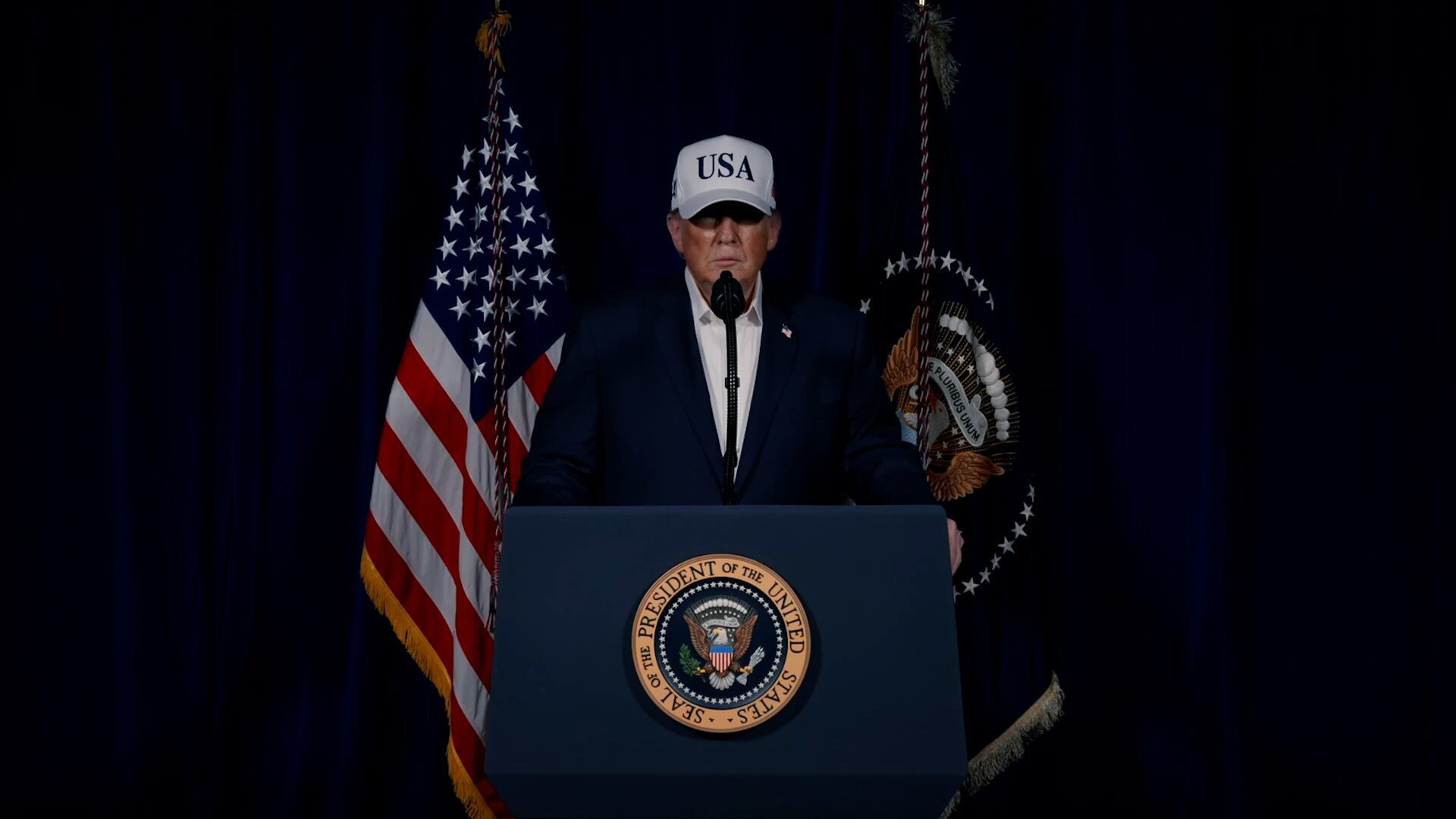
President Donald Trump has repeatedly proffered the idea of the United States taking over Greenland on account of its geostrategic location for U.S. homeland defense, by military force if necessary − a move that would be unprecedented among NATO alliance members.
New efforts by governments here now seem to be aimed at boosting Europe’s and Denmark’s footprint in and around Greenland in the spirit of assuaging U.S. concerns, effectively giving the American partner no reason for going rogue.
Talk has been loud among European policy elites that a NATO Arctic mission modeled on the alliance’s Baltic Sentry project might be forthcoming. The idea has been discussed by top-level officials from Germany, the U.K., France, Belgium and other European NATO countries, mostly behind closed doors. Belgian Defense Minister Theo Francken was the first official to publicly call for the creation of such a mission earlier this month.
Germany’s counterpart, Boris Pistorius, announced prospects for a stronger European NATO presence in the Arctic on Jan. 13 during a meeting with EU foreign policy and defense chief Kaja Kallas in Berlin. He specifically referenced a possible NATO mission called “Arctic Sentry,” though he cautioned that this would require a NATO framework and “that cannot be ready in the next four weeks or, in my estimation, even three months,” he said.
Until then, he said, key European NATO nations agreed they will need to send clear signals that the continent was stepping up to better defend the Arctic territory together with the U.S.
The U.S. military already has a base on Greenland, currently housing 150 troops in Pituffik who are mainly devoted to ballistic missile early warning and space surveillance. That number is down from well over a thousand troops previously deployed under a still-valid contract with Denmark that has allowed Washington to establish bases and move military assets at will on the Arctic Island since 1951 and for as long as NATO exists.
Alliance officials insist there has been no decision made yet to create an Arctic Sentry mission. Speaking at a Swedish security conference over the weekend, Alexus Grynkewich, NATO’s Supreme Allied Commander Europe, said that while all Arctic operations had been merged under Joint Force Command Norfolk last month, it was premature to assume that the alliance would launch a dedicated mission.
Despite the newfound urgency from European capitals, Arctic defense is hardly new on the radar of treaty organization officials, with the region’s existing and growing strategic importance being well-known for decades and NATO forces working in and around Greenland since the Cold War.
In that vein, NATO had a “very good discussion” on the topic of Arctic security in the summer of last year, and the alliance is now working on the next steps, NATO Secretary General Mark Rutte said at the Global Europe Forum in Brussels on Jan. 13. He said security in the high north was already raised by Trump in his first term, with sea lanes opening up, and Russia and China being more active.
“It’s not for peaceful purposes, they’re not studying the seals and the polar bears,” Grynkewich said, referring to Russian and Chinese vessels in the area. “They’re out there doing bathymetric surveys and trying to figure out how they can counter NATO capabilities on and under the sea. So that’s something that could grow very quickly, and we need to be mindful of it and ready.”
“In NATO, we all agree that when it comes to the protection of the Arctic, we have to work together, and that’s exactly what we are doing,” Rutte said. That goes beyond the seven NATO members that border the Arctic, he noted, citing comments by the United Kingdom and Germany on their willingness to keep the region safe.
Rutte also cited Denmark’s investment in Boeing P-8 maritime patrol aircraft, long-range drones, F-35s and air-to-air refueling, saying all of those are capabilities for defending the country, NATO and the Arctic region as a whole.
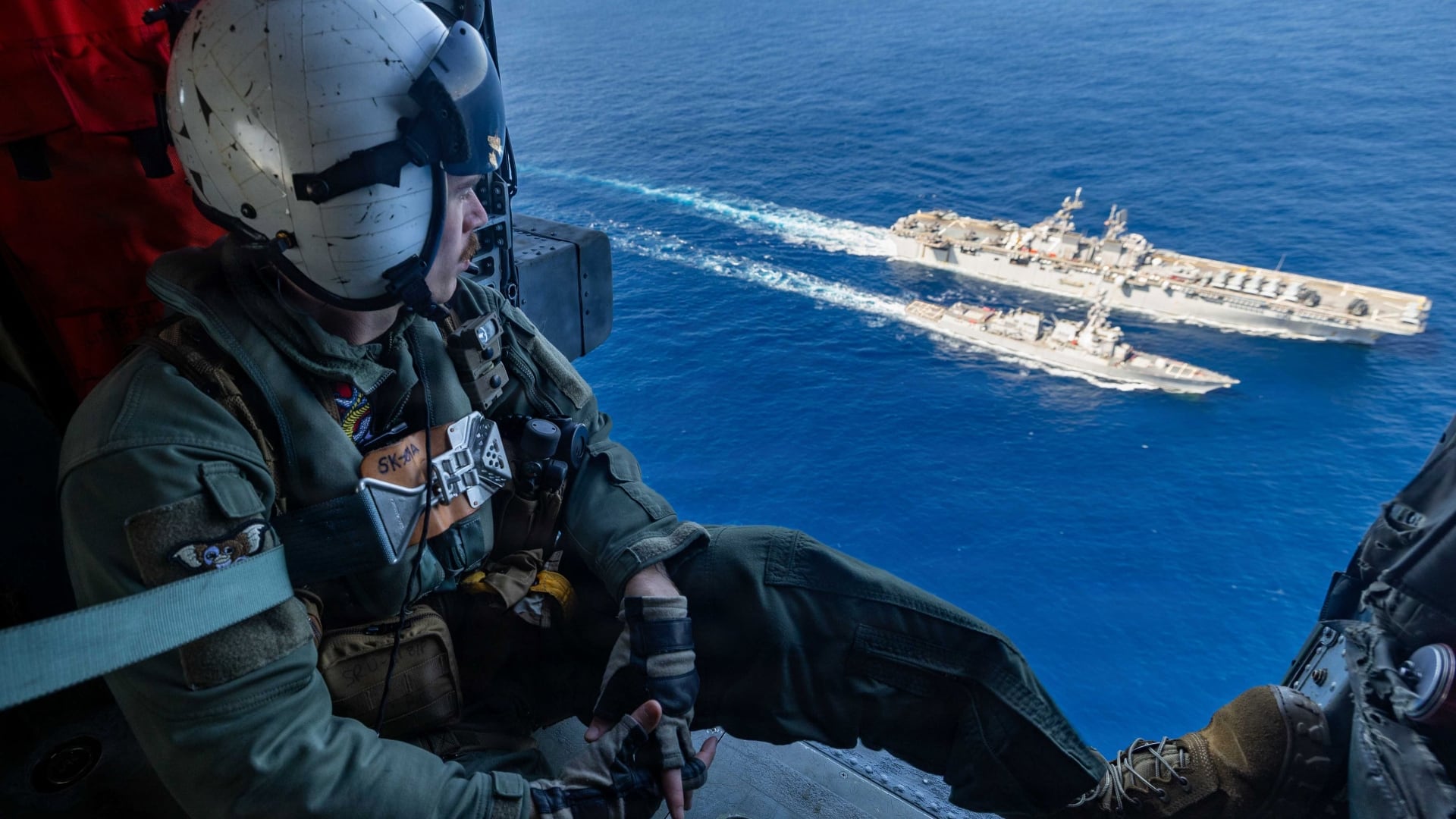
Any NATO presence in the region would include a package combining manned platforms, such as frigates, with unmanned technologies like drones, a NATO official told Defense News on Tuesday, speaking on the condition of anonymity. However, the official noted that integrating these types of technologies in the harsh conditions found in an Arctic environment will be significantly more challenging than in the Baltic or Mediterranean seas.
Meanwhile, one Danish lawmaker challenged Trump’s characterization of threats to Greenland, specifically refuting his claims about Chinese and Russian ships in the region. The pushback by Stine Bosse, a Danish member of the European Parliament, centers on Trump’s Jan. 11 statement that Greenland “is covered with Russian and Chinese ships all over the place.”
In conversation with Mark Rutte days later, Bosse said there was “not one single Chinese or Russian ship around Greenland, let that be stated as a fact.”
One of the Trump administration’s key talking points to justify its threats to seize Greenland has been that Denmark is unable to adequately defend its autonomous territory in the high north.
To many Europeans, the most urgent threat to Greenland right now seems not to be China, Russia or North Korea but rather their longtime ally in the form of the United States.
The people of Greenland are “scared stiff, they’re stressed and they’re more than just worried,” Bosse told Rutte in Brussels. And they overwhelmingly reject annexation by the United States: A mere six percent of Greenlanders were in favor when asked in an early 2025 poll.
“Nothing about Greenland without Greenland,” Greenland’s Foreign Minister Vivian Motzfeldt told reporters while speaking in Denmark earlier this week. And Greenland has chosen to side with Denmark, in no uncertain terms.
“We are now facing a geopolitical crisis, and if we have to choose between the United States and Denmark here and now, we choose Denmark,” Greenland’s prime minister Jens-Frederik Nielsen said while speaking alongside Danish prime minister Mette Frederiksen on Tuesday. “We choose NATO. We choose the Kingdom of Denmark. We choose the EU,” he added.
Speaking in Berlin yesterday, the EU foreign policy chief Kaja Kallas suggested there were ongoing discussions behind closed doors on what concrete measures were available to counter the threats from the United States.
“The least we can say is that would be a really unprecedented situation in the history of NATO and the history of any defense alliance in the world,” added Pistorius, referring to a situation in which the Trump administration would follow through and take over Greenland one way or another.
And while the 1951 agreement between Washington and Copenhagen on U.S. troops on the island remains active, so too is a Danish standing order from the same period that requires the country’s troops to open fire even without orders if foreign troops were to try and capture Greenland.
Linus Höller is Defense News' Europe correspondent and OSINT investigator. He reports on the arms deals, sanctions, and geopolitics shaping Europe and the world. He holds a master’s degrees in WMD nonproliferation, terrorism studies, and international relations, and works in four languages: English, German, Russian, and Spanish.
Rudy Ruitenberg is a Europe correspondent for Defense News. He started his career at Bloomberg News and has experience reporting on technology, commodity markets and politics.
Elisabeth Gosselin-Malo is a Europe correspondent for Defense News. She covers a wide range of topics related to military procurement and international security, and specializes in reporting on the aviation sector. She is based in Milan, Italy.