WASHINGTON — By acquiring ISR and situational awareness specialist ForceX, L-3 Communications is positioning itself as a major provider of real-time military intelligence.
L-3 announced the acquisition last week, saying it was renaming the Nashville-based technology company L-3 ForceX and making it part of its. The terms of the deal were not made public, but L-3 said it will fold the new company, which it anticipates will produce around $30 million in revenues in 2016, into its Integrated Sensor Systems (ISS) sector. within the Electronic Systems business segment.
The two companies have worked together for years, and combining them allows L-3 to grow its capabilities from sensor provider to information provider, said Jeff Miller, president of L-3's ISS Sector, in an interview with Defense News.
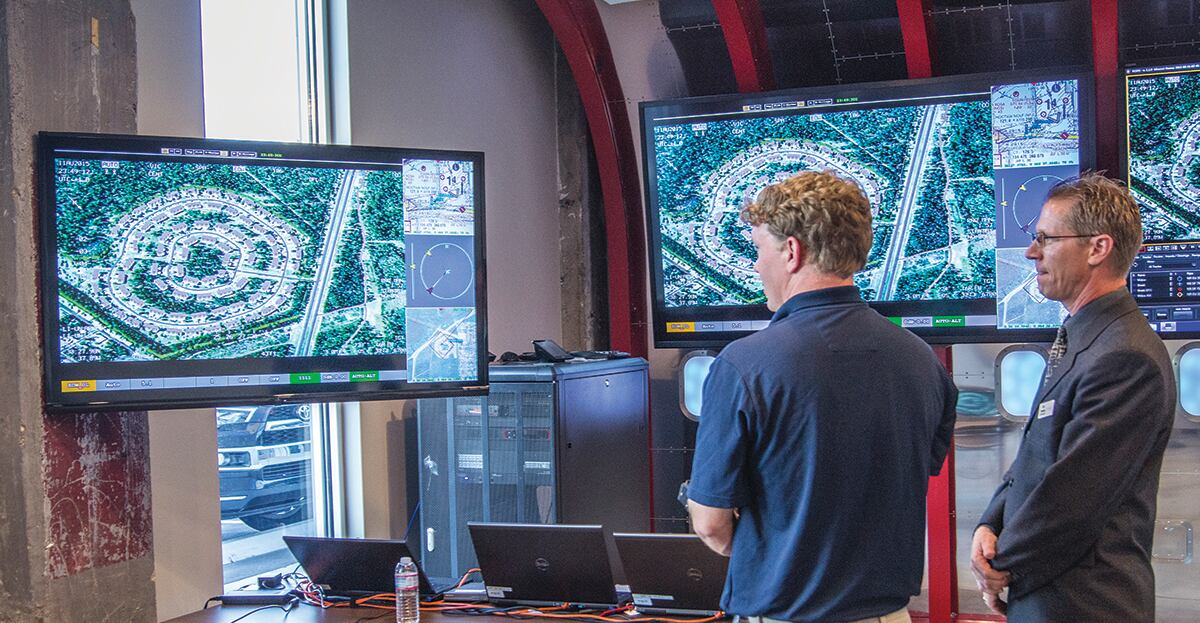
"We bring that [sensor] imagery and in simple terms ForceX and their people and software solutions turn that imagery into usable useable information for a user in real time," Miller said. In particular, L-3’s expertise in Wide Area Motion Activity and ForceX’s specialization in Processing, Exploitation and Dissemination (PED) of information are a good fit.
"For us, that's where ForceX excels. It's difficult to take all that data and let a user really focus on what they need to do and make decisions in real time," he said. "We found that our systems align well, our cultures align well."
ForceX’s existing contracts with US Special Operations Command (SOCOM) and the US Air Force provides L-3 with direct links to two customers with keen interest in translating video feeds and additional data from sensors into actionable intelligence, Miller he said. L-3’s size and global reach will help the smaller company into markets worldwide.
"That will enable us to compete more effectively on larger opportunities, both domestically and internationally," he said.
Jeffrey Sorenson, a retired lLieutenant gGeneral with the US Army who is a partner in A.T. Kearney’s aerospace and defense practice, said the deal puts L-3 in a long-term position to compete for C4ISR-related contracts. Even as the Pentagon’s budget faces heightened competition for funding in the wake of drawdowns in Iraq and Afghanistan, businesses that offer situational awareness solutions will remain in demand, he said.
"If you look at the components of the budget and you break it down by functional capability, the C4ISR category is going to be one, just like cyber, where you continue to see growth," he said. "It's not going to be massive growth, but in comparison to everything else, those budgets [segments] in some cases are protected or in many cases enhanced because everybody sees that that's the enabler."
Companies, such as Booz Allen Hamilton, Lockheed Martin and Raytheon have been buying small cyber companies with niche capabilities, and other companies are likely to follow suit, paving the way for more deals in the C4ISR and cyber sectors, he said.
"As they look to the future, between cyber and C4ISR, those are going to be the two big budget plays, and everybody's trying to figure out how to position themselves so they can be in the best place in order to get the contracts that the services and the warfighters are demanding," Sorenson said.
ForceX's turnkey training services also made it attractive to L-3, he said.
"If you're into the training piece, and you're constantly having students come through, that's a stable revenue base that you can count on, and they're probably looking to expand into that particular realm," he said.
L-3's Miller said that ForceX CEO Tracy Guarino will not be a part of the new company, but the remaining 100-plus ForceX employees will, and there are no plans to relocate them from Nashville.
"We believe very strongly that we are in the right markets with what we're trying to do with ISR," with very strong airborne and naval sensor applications," Miller said. "This is a sign of our commitment to continue to invest in and grow that business."
Email: aclevenger@defensenews.com
Twitter: @andclev