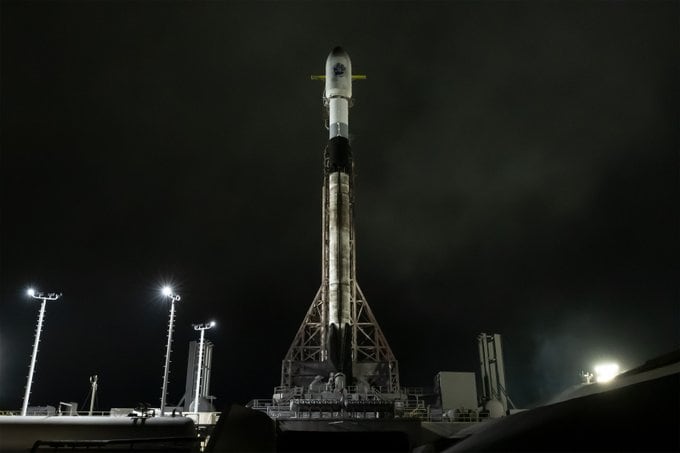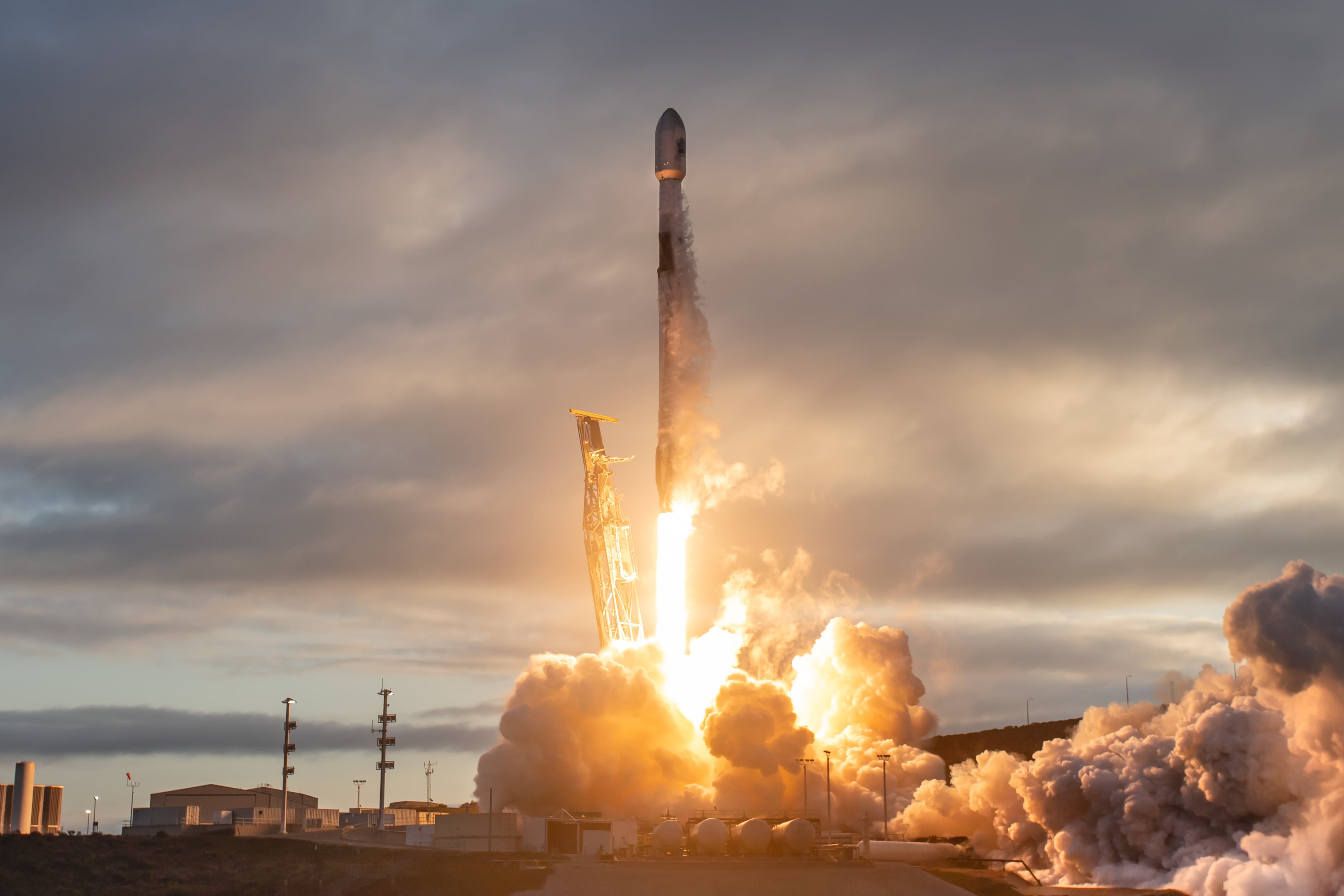
Following a 2025 that saw Vandenberg Space Force Base complete a record 77 space launch, missile test and aeronautical operations, Space Launch Delta 30 is exploring further expansion at the California base.
On Dec. 29, 2025, SLD 30 issued a Request for Information to gauge interest from U.S. commercial launch providers in leasing and developing Space Launch Complex-14 at Vandenberg.
The RFI seeks to establish infrastructure for heavy and super-heavy vertical launch vehicles to address critical gaps in launch capabilities at Vandenberg. Current pads support medium and heavy vehicles, but the base lacks dedicated infrastructure for true heavy (20,000–50,000 kg. to low Earth orbit) or super-heavy (more than 50,000 kg.) programs.
If developed, SLC-14 would become the first dedicated super-heavy launch complex on the West Coast.
Qualified providers would finance, design, construct, operate and maintain the facilities, bearing all development and compliance costs in exchange for a fair-market-value lease.
According to the RFI, “A heavy/super-heavy launch capability at VSFB offers a strategic advantage to the USSF, the deployment of larger, more capable military satellites and facilitating rapid response missions during national security emergencies. Adding heavy/super-heavy launch capabilities at VSFB enhances resilience, diversifies the government’s portfolio, and accelerates satellite constellation reconstitution due to increased lift capacity.”
Located near the base’s southern boundary, SLC-14 is described as “the installation’s most viable site for large-scale heavy/super-heavy launch programs,” leveraging proximity to existing infrastructure.
The SLC-14 development directly supports the U.S. Space Force’s mission and “Race to Resilience” initiative by expanding assured access to space for national security, federal and commercial payloads, particularly in polar and sun-synchronous orbits. These orbits, ideally suited to Vandenberg’s location, enable global coverage for missile warning and intelligence satellites, as well as consistent lighting conditions for repeatable Earth observation and reconnaissance, advantages less readily available from East Coast launch sites.
Enabling heavy or super-heavy launch capabilities not currently available at Vandenberg enhances rapid satellite reconstitution, mission diversification and resilience against disruptions such as supply chain issues or operational anomalies.
This aligns with broader priorities for maintaining space superiority in increasingly contested domains. Diversifying launch sites and providers reduces single-point vulnerabilities in the national space launch infrastructure, allowing quicker recovery from adversarial actions or technical failures while facilitating proliferated constellations and hybrid military-commercial systems, key elements of resilient space operations outlined in recent doctrine.
Interested providers should submit responses by Feb. 12, 2026.