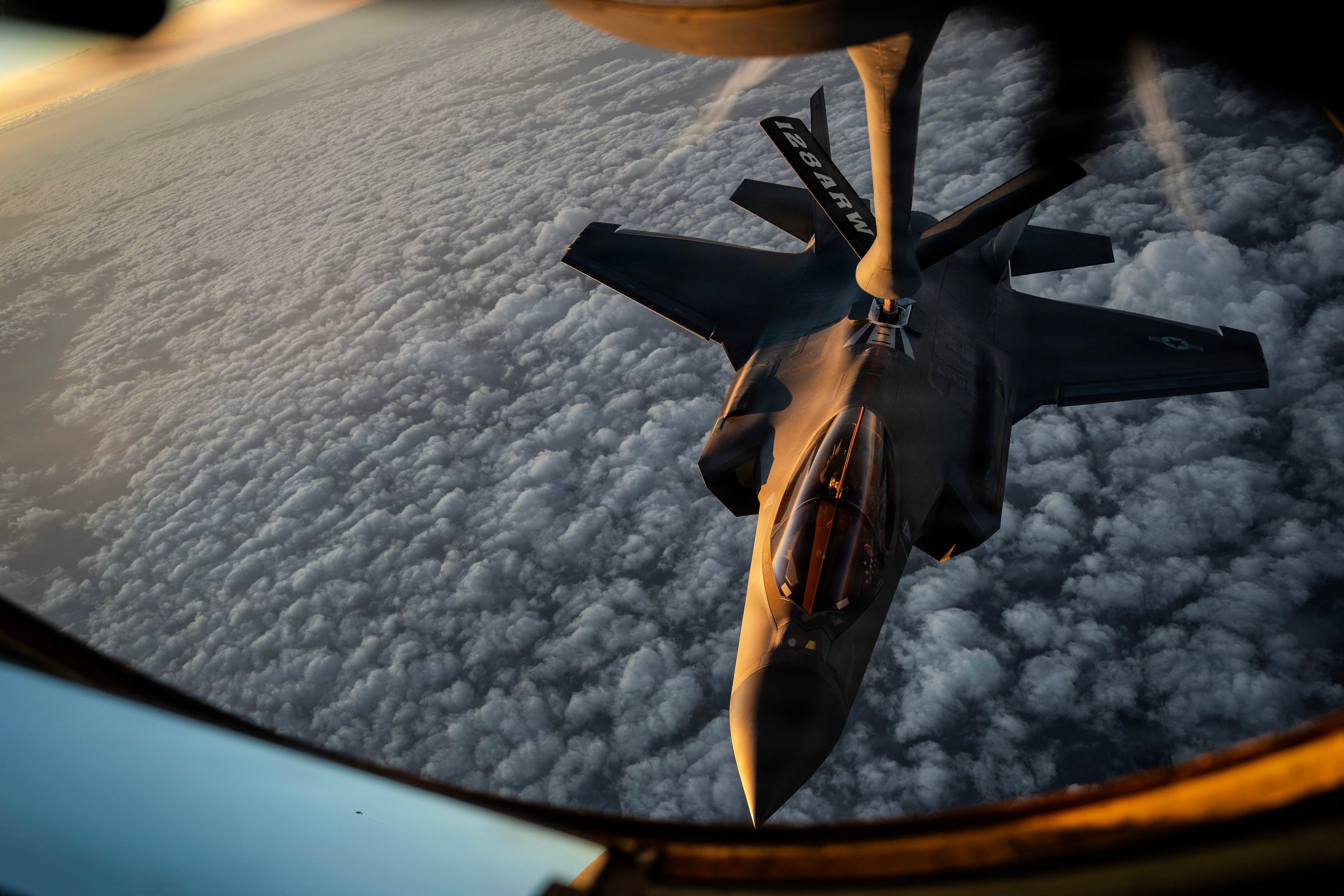
The U.S. Air Force will recapitalize aerial refueling tanker aircraft for decades longer and build new platforms for their sustainment in the meantime, service leaders and industry partners said Tuesday.
To support the tanker aircraft and the anticipated mission capability rates, the Air Force should continue prioritizing available spare parts and modernization efforts for the aircraft, officials and industry experts said during a panel at the Air & Space Forces Association’s 2026 Air, Space & Cyber Conference.
“The last KC-135 pilot has not been born,” Air Mobility Command Deputy Commander Maj. Gen. Gerald Donohue said during the panel, titled “Long-Range Airpower: Lessons from Midnight Hammer and Epic Fury.”
“That is just a statement of fact when you consider the time it takes to modernize, and so we will have to sustain our legacy platform as well as our newest platforms, and ensure that the joint force is supported by being able to execute the mission,” he continued.
The force primarily uses two tanker aircraft: the legacy KC-135 Stratotanker and the next-generation KC-46A Pegasus, which is in the first phase of recapitalization.
As the force continues to modernize its strategic bomber fleet, the service must increase optionality by modernizing the tanker fleet to better offer alternatives when needed.
Moving forward, recapitalization will be the command’s priority alongside modernization of existing aircraft, Donohue asserted, by emphasizing connectivity, survivability and technical viability.
“Epic Fury, Midnight Hammer underscore the importance that connectivity plays, not only to our own survivability, but more importantly, to the success of the joint force and the mission at hand, whether it’s passing information to the bomber force as they’re executing their refueling or to the combat air forces forward, we’ve got to have the connectivity to add that value,” Donohue said.
Donohue said that the service is currently going through recapitalization as it brings on the KC-46s and modernizes the KC-135s, highlighting that once the acquisition of the KC-46 is completed, the service will still have hundreds of KC-135s.
As future conflicts and operating areas get more and more contested, getting the bomber or fighter force to their last Air Refueling Control Time, or ARTC, puts the force at risk, he said, furthering the need for survival platforms with additional tanker systems that propel the viability of legacy and future aircraft.
“We can never walk away from the idea that our young airmen out there on the line today and for decades still will have to sustain 70-year-old-plus airframes,” Donohue said.
The panelists argued that partnership with industry matters most as the “biggest enabler” for getting capability into the hands of the warfighter faster and at a lower cost to the service, saying that more opportunities to rethink the work upfront boosts efficiency for the operator.
Jamie Burgess, Boeing’s vice president and general manager of Mobility, Surveillance and Bombers, said that the work the company did on the KC-46 aircraft, such as upgrades to the vision system for refueling, altered the way they think about the development work.
“Getting teams together — operators, subject matter experts, engineers — come to agreement on design up front so we can get after the detailed design work and get it built and tested and out to the operators,” he said in the panel.
Cristina Stassis is a reporter covering stories surrounding the defense industry, national security, military/veteran affairs and more. She previously worked as an editorial fellow for Defense News in 2024 where she assisted the newsroom in breaking news across Sightline Media Group.