


Team Lynx’s XM30 delivers what the National Defense Strategy demands: non-traditional innovation, proven industrial capability and domestic production at scale.
The National Defense Strategy (NDS) calls for America to “Supercharge the U.S. Defense Industrial Base” by reinvesting in production capacity, empowering innovators, adopting technologies like artificial intelligence and removing obstacles to deliver capabilities at the scale and speed the Joint Force requires. The U.S. Army’s XM30 program shows how to execute that vision.
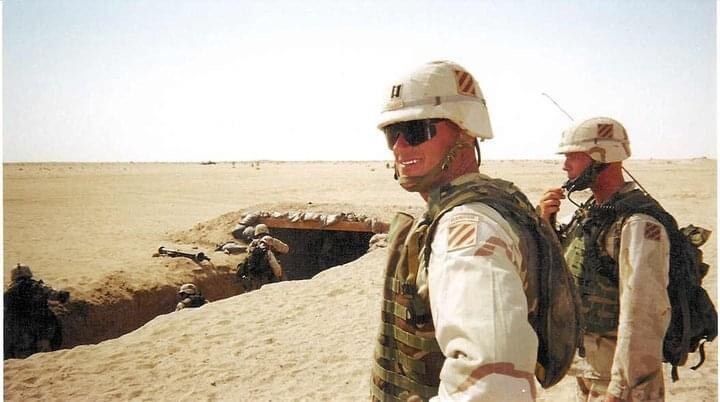
As commander of Charlie Company, 3-15 Infantry during Operation Iraqi Freedom, I led my soldiers through the opening days of the war – from crossing into Iraq in the van of 3rd Infantry Division’s march to Baghdad, through numerous meeting engagements in places such as Najaf, Karbala, and Mahmoudiya, to participating in both of 2nd Brigade’s Thunder Runs into Baghdad. Time and again, our infantry fighting vehicles made the difference. I understand the criticality of these platforms to winning on the battlefield and bringing soldiers home alive. The future battlefield will be even more demanding, and our infantry squads need a modernized fighting vehicle to survive and win.
Team Lynx exemplifies the “Arsenal of Freedom” that the Department of War is working to rebuild, with companies from across the defense tech ecosystem collaborating to deliver capability with speed and agility. The partnership includes American Rheinmetall, L3Harris Technologies, Raytheon, Textron Systems, Anduril Industries and Allison Transmission – aligning innovation with reliability, advanced technology with production discipline and speed with long-term sustainment. This is the industrial approach the NDS envisions.
Integration, Not Trade-offs The NDS rejects false choices between non-traditional innovators and established manufacturers. It demands integration of new technologies into proven industrial frameworks that can deliver and sustain combat capabilities.
The Lynx XM30 embodies that principle. It represents a generational leap in capability – a decade or more ahead of competitors in advanced technology. It’s a digitally native fighting system built for lethality, survivability and mobility that’s capable of evolving as threats change. Partners like Anduril bring advanced autonomy, AI-enabled sensing and software-defined capabilities that are scaled for sustained combat operations and integrated into a platform built for the long haul. Anduril provides the Command, Control, Communications, Computers and Intelligence (C4I) software on the platform, while L3Harris provides Ground Combat Integration Architecture (GCIA) software to ensure all components communicate seamlessly. Additionally, L3Harris provides a GCIA compute box that delivers all the processing power and hosts all the software for the Team Lynx vehicle. This architecture means the XM30 can receive capability upgrades in the field, keeping pace with emerging threats without requiring soldiers to wait years for modernization.
Mission Systems as Force Multipliers Modern ground combat is defined by information, connectivity, lethality and decision advantage. L3Harris brings proven expertise in assured communications, sensors and mission systems that operate in contested environments.
On Lynx XM30, L3Harris integrates systems from across the company’s portfolio that enable crews to see, share, decide and strike. WESCAM® imaging systems provide 360-degree awareness. RF-9800W interoperable, protected communications ensure secure connectivity across joint and coalition forces. The CAMAN™ waveform enables communication between command posts, vehicles and dismounted soldiers, while the ROVER™ Waveform commercial data link provides connection to the platform intelligence, surveillance and reconnaissance network above. Motors for TOW missile systems deliver precision anti-armor firepower.

Raytheon’s Multi-Mission Launcher brings fire control that allows crews to adapt loadouts while collecting and relaying sensor data. L3Harris sensors and communications enable Raytheon’s fire control and targeting, creating a seamless kill chain from detection to engagement.
During the thunder runs into Baghdad, we learned that situational awareness and communications in urban combat can mean the difference between mission success and catastrophic failure. The systems Team Lynx partners provide ensure crews and squads can fight and win even when enemies try to blind or isolate forces – capabilities I wish we’d had in 2003.
Industrial Sovereignty as Strategic Strength The NDS correctly emphasizes that a resilient, domestic industrial base is a strategic necessity. Team Lynx reflects this through deep American industrial roots. American Rheinmetall is investing in U.S. facilities, workers and supply chains to ensure Lynx XM30 is designed, built and sustained in America.
That commitment extends across the team. Allison Transmission builds upon its proven propulsion systems from Abrams to Stryker by supplying the eGen Force hybrid transmission for Lynx XM30, while Textron Systems contributes survivability and integration expertise from the Army’s combat vehicle fleet. Both companies have established U.S. manufacturing operations ready to produce at scale.
Executing the Strategy Team Lynx demonstrates what the defense industrial base can achieve when policy vision meets industrial execution – integrating innovative technologies with proven industrial capability, onshoring production and sustainment, and delivering at the speed and scale required. The soldiers who will crew these vehicles in future fights deserve nothing less: our best effort, delivered on time, at scale, and built to bring them home alive.

Brigadier General Larry Q. Burris Jr. (Ret.) served as the 60th Chief of Infantry and Director of the Soldier Lethality Cross Functional Team. He commanded troops at every level from platoon to brigade combat team, including Charlie Company, 3-15 Infantry during Operation Iraqi Freedom, where he led soldiers through the opening days of the war and both thunder runs into Baghdad. His nearly 30 years of service included multiple peacekeeping and combat deployments to Bosnia, Kuwait, Iraq and Afghanistan, and key staff positions including Executive Officer to the Secretary of the Army and Operations Officer for Combined Joint Task Force Operation Inherent Resolve.


