İZMİR — Turkish President Recep Tayyip Erdoğan visited Saudi Arabia and Egypt earlier this month, marking fresh steps in the normalization of relations with key regional powers and opening the door to new defense deals.
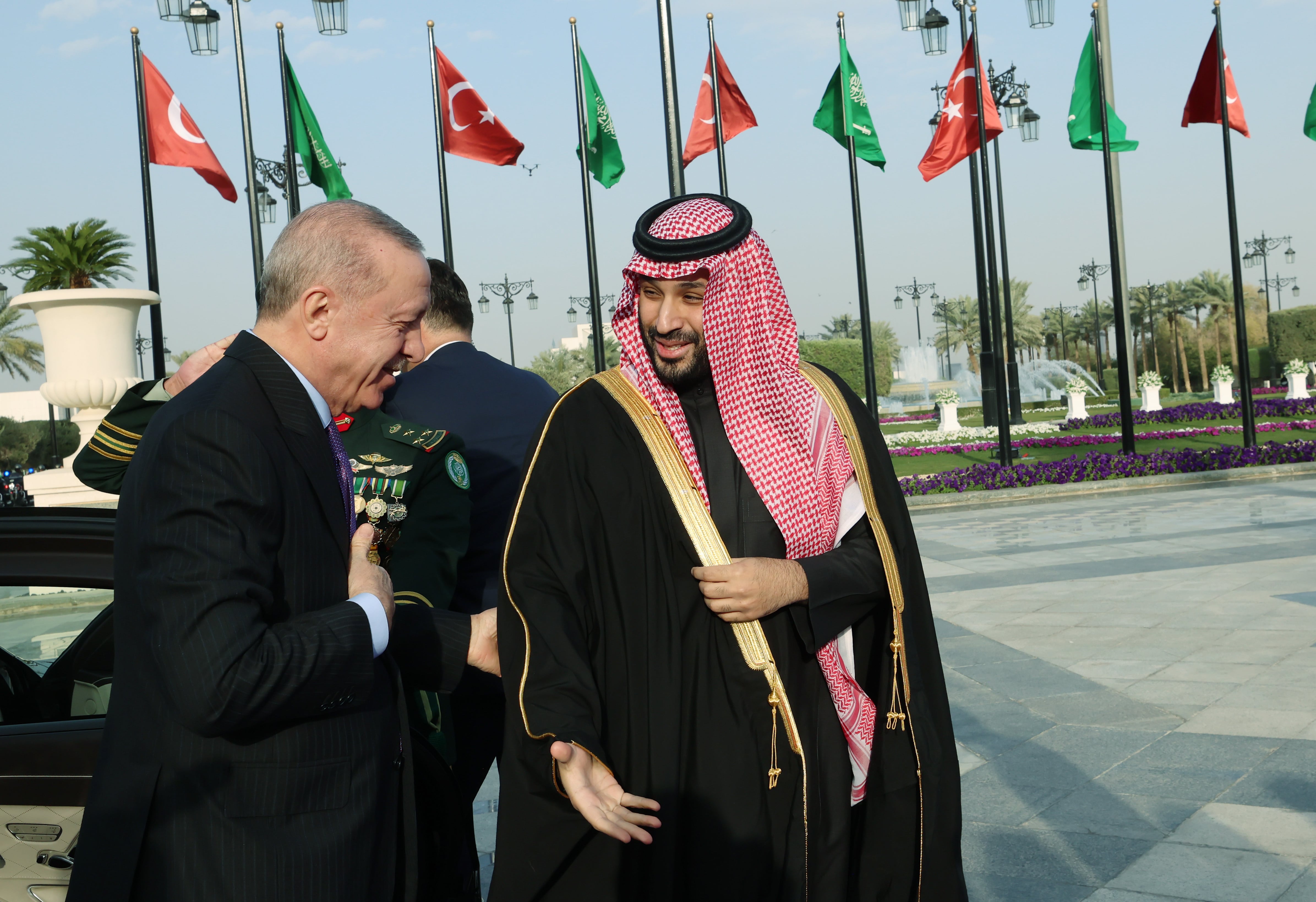
The first stop of the two-day tour was Riyadh, where Erdoğan met with Crown Prince Mohammed bin Salman. According to official statements, both sides emphasized the need to activate existing defense cooperation agreements and expressed a shared intention to deepen military and security ties.
Speaking to reporters during his return to Turkey, Erdoğan highlighted growing defense-industrial cooperation between Ankara and Riyadh, including potential joint investment in Turkey’s fifth-generation fighter program, KAAN.
He described KAAN as a symbol of Turkey’s strategic autonomy, noting that discussions with Saudi Arabia included the possibility of shared investment in the program.
Cooperation on a fifth-generation fighter plane like KAAN fits into the broad agendas of both countries and would be financially, strategically, and industrially transformative for both sides, according to retired Turkish Air Force Brig. Gen. Hüseyin Fazla , president of the Center for Strategic Research and Analysis (STRASAM), an Ankara based think tank.
According to Fazla, Saudi participation could fundamentally reshape the KAAN project’s economics and export prospects.
“A large Saudi order would slash unit costs, accelerate production, and turn KAAN into a serious global competitor,” Fazla said.
For Riyadh, the appeal goes beyond acquiring a new aircraft.
“KAAN offers Saudi Arabia a strategic escape from over-reliance on Western arms suppliers and technology transfer built into the partnership, it directly supports Vision 2030 and Riyadh’s ambition to build a domestic defense industry.” Fazla stated.
Following his Saudi visit, Erdoğan travelled to Cairo to attend the second meeting of the High-Level Strategic Cooperation Council, co-chaired with Egyptian President Abdel Fattah El-Sisi.
During the meeting, the two countries signed a Military Framework Agreement, formalizing expanded cooperation in defense and security.
The agreement was signed by Turkish Defense Minister Yaşar Güler and his Egyptian counterpart, Gen. Abdel Megeed Saqr.
“This is not a strategic realignment — it is strategic-economic normalization driven by pragmatism on both sides,” sad Serhat Süha Çubukçuoğlu, a senior fellow at the Abu Dhabi-based TRENDS Research and Advisory consultancy.
“Cairo and Ankara are deepening ties horizontally across trade, defense, and diplomacy without redrawing their strategic red lines,” he added.
Alongside the political and military dialogue, Turkey’s state-owned defense manufacturer Makine ve Kimya Endüstrisi (MKE) concluded a $350 million defense export and industrial cooperation package with the Egyptian Ministry of Defense.
Under the agreement, Egypt will acquire the MKE TOLGA Close-In Air Defense System to counter low-altitude threats such as unmanned aerial vehicles, loitering munitions, precision-guided weapons, and cruise missiles, in a deal valued at approximately $130 million, marking the system’s second international export following its earlier sale to Qatar.
Beyond the air defense procurement, the broader package includes the construction of a 155mm long-range artillery ammunition production plant in Egypt, as well as a facility for the local manufacture of 7.62mm and 12.7mm small-caliber ammunition.
MKE and Egyptian authorities also agreed to establish a joint company to manage the new production facilities and support defense exports from Egypt to regional markets, signaling a shift toward long-term industrial cooperation rather than one-off arms sales.
“While Egypt is deliberately diversifying away from Western arms suppliers constrained by political conditions, Turkey is strengthening its role as a regional defense exporter and technology partner, said Çubukçuoğlu.
Cem Devrim Yaylali is a Turkey correspondent for Defense News. He is a keen photographer of military ships and has a passion for writing about naval and defense issues. He was born in Paris, France, and resides in Istanbul, Turkey. He is married with one son.