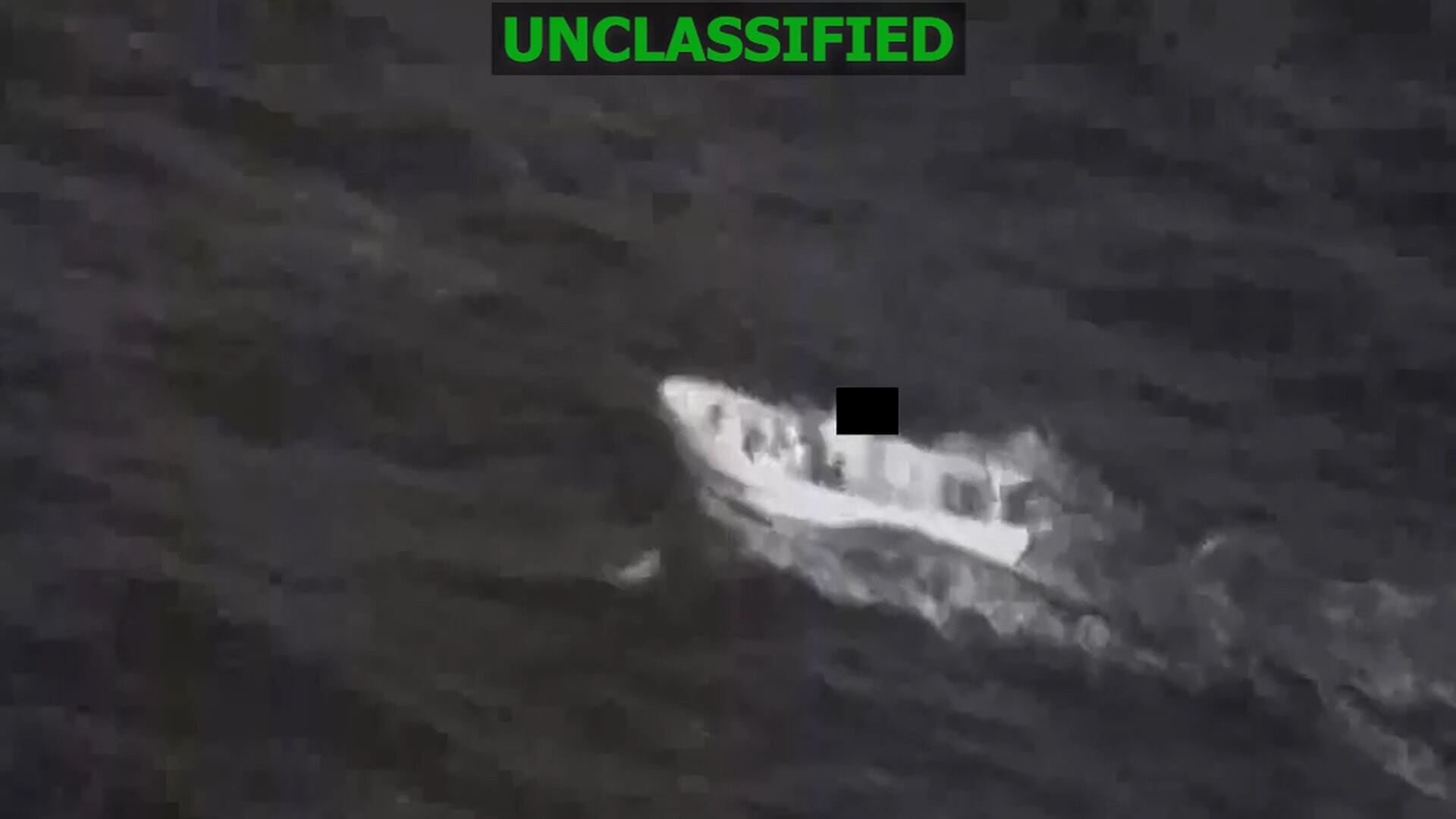
BERLIN — Three Baltic states recorded drone incursions within roughly 48 hours this week, as Ukrainian strike drones targeting Russian Baltic port infrastructure were apparently diverted into NATO territory by Russian electronic warfare.
The most serious incident occurred at 3:43 a.m. on March 25, when a drone crossing Estonian airspace from Russia struck the chimney of the Auvere power station in the eastern Ida-Viru County − located less than 50 kilometers from the Russian port of Ust-Luga, which Ukraine was striking overnight. No one was injured and the plant’s power output was not affected, Estonian energy company Enefit Power said. But the incident was enough to trigger an emergency government session in Tallinn and a nationwide alarm alert that caused confusion when it failed to specify the affected region.
The Director General of the Estonian Internal Security Service, Margo Palloson, confirmed it was “indeed a drone of Ukrainian” origin, and Estonia’s foreign minister stressed it “was not directed at Estonia.”
Estonian Defense Forces Commander Lt. Gen. Andrus Merilo said investigators were working to determine what type of drone hit the plant, but he was unambiguous about its payload. “We can say with fairly high confidence that it was not a reconnaissance drone, but rather an explosive-laden device — either an attack drone or a decoy drone,” he told reporters.
Earlier the same night, a drone entered Latvian airspace from Russia and detonated in the Krāslava region in southeastern Latvia at around 2:30 a.m., according to Latvian military authorities. Latvian Deputy Chief of Joint Staff Egils Leščinskis said the object was detected by radar roughly ten minutes before impact. “The aircraft most likely veered off course or was affected by electromagnetic warfare measures,” he said.
On Monday night, a Ukrainian drone had already come down in the Varena district of southeastern Lithuania, near the Belarusian border, following a separate attack on Primorsk − Russia’s other major Baltic oil port, which had been burning for over two days by Wednesday. Lithuanian authorities confirmed the drone had flown over Belarus before crashing.
RELATED
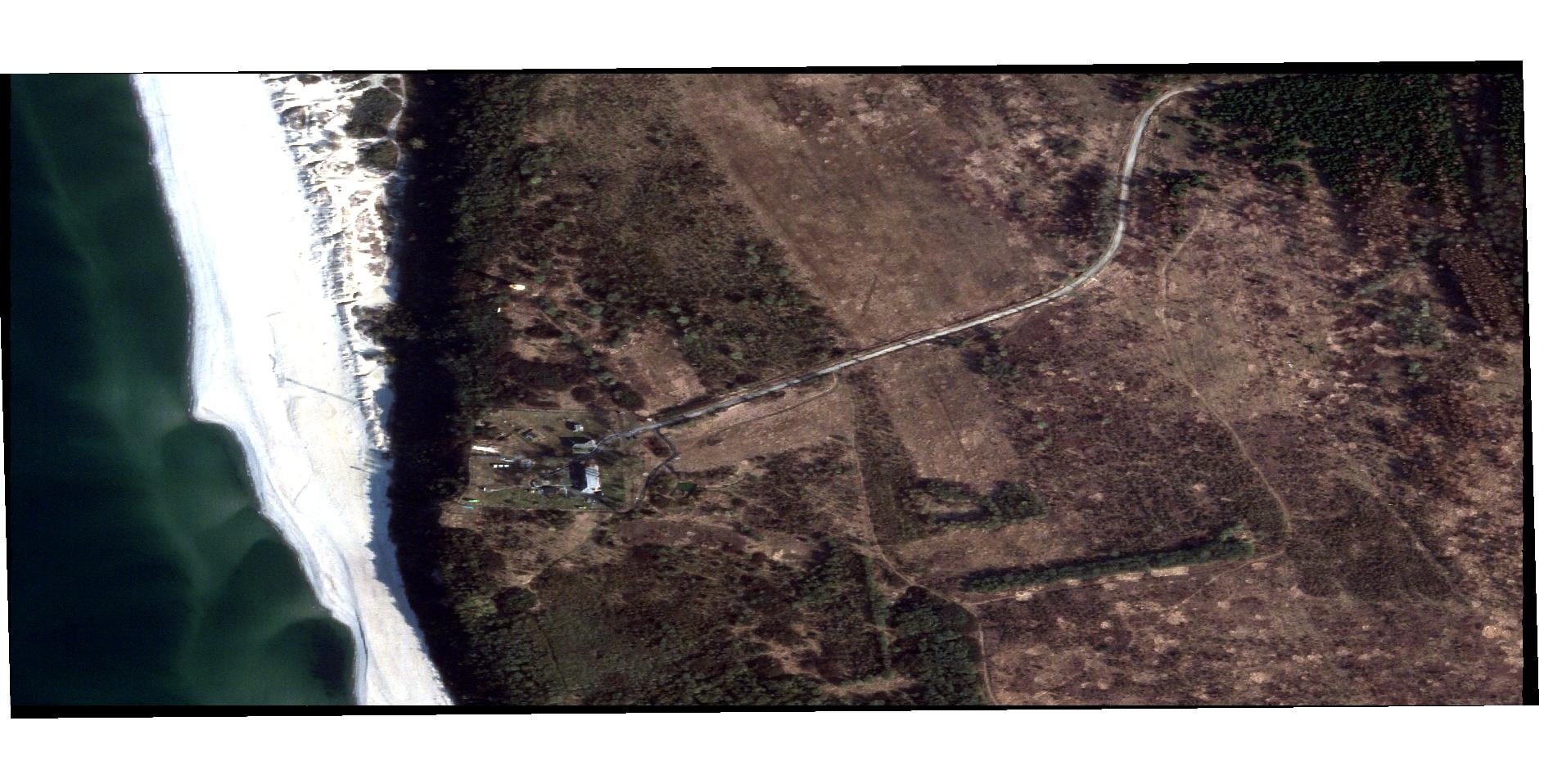
It’s not clear why these Ukrainian drones are now repeatedly falling on Western territory rather than reaching their intended Russian targets, but Russian GPS jamming and spoofing have been singled out as a likely cause by officials and analysts. Russian transmitters are known to block and falsify Global Navigation Satellite System (GNSS) signals, such as those from the GPS and European Galileo satellite constellations. This can cause drones to lose track of their location or even veer off course when the systems on board are fed falsified location information.
“It’s electronic warfare with the aim of preventing being hit by things that use satellite navigation – drones,” Ralf Ziebold of the German Aerospace Center DLR previously told Defense News for an investigation that geolocated the origin of these signals.
It’s unclear whether Russia is actively redirecting drones to NATO countries or whether the incursions are simply a byproduct of EW defenses protecting key infrastructure and assets on Russian soil. Western officials so far have described the incidents as accidents.
In addition to electronic warfare, the distances at play are huge: Some of the targets Ukrainian drones were intending to strike were up to 1,000 kilometers from Ukrainian territory, making these some of the longest-distance strikes Ukraine has conducted. These long flights can magnify minor navigational errors.
Russian media, heavily controlled by the Kremlin, have reported that the Baltic States have opened their air spaces for the overflight of Ukrainian drones on their way to strike targets in the Leningrad oblast. The claim, which was picked up by Russian state-owned TV channel Rossiya 1, appears to have originated from Mash, one of the most widely read Russian-language Telegram channels.
None of the three drones was intercepted by the Baltic states’ or allied air defense systems. The EDF commander acknowledged that engaging drones near the Russian border is legally and tactically constrained. “Our goal is to avoid any unintended escalation, so we certainly cannot engage drones where there is even the slightest risk that our actions could carry over into Russian territory,” Merilo said.
The incidents follow a growing number of drone incursions along the eastern flank. In July 2025, Lithuania recorded two incursions by Russian-origin Gerbera drones crossing from Belarus − the second of which was found at the Gaižiūnai military training ground carrying approximately two kilograms of explosives, some 100 kilometers inside NATO territory. In August, Ukrainian drone fragments were found near Elva in south-central Estonia after a night of Ukrainian strikes on Russian inland targets. The following month, Latvia recovered Gerbera fragments on a western beach.
That accumulation of incidents has sharpened allied frustration. “These are the effects of Russia’s full-scale war of aggression. We can assume that we will see more such incidents,” said Margo Palloson, director general of Estonia’s Internal Security Service.
Latvian Prime Minister Evika Silina drew a connection with Western capitals’ preoccupation with the war against Iran: the attacks on Ukraine and their spillover were intensifying “at a time when the attention of the West has been diverted by events in the Middle East,” she said.
Latvian Defense Minister Andris Sprūds cut short a visit to Kyiv, where he had been delivering drones to Ukrainian forces, to return home. Lithuania’s Foreign Minister Kęstutis Budrys said Vilnius had opened talks with Kyiv. None of the governments signaled any intent to invoke Article 4 or 5, and all three publicly attributed the drone incidents to the spillover of Russia’s war.
Ukraine’s Foreign Ministry spokesman Heorhii Tykhyi addressed the incidents at a press conference, stating that Kyiv is in close contact with its partners to clarify all details and that such incidents “have been occurring regularly” in the Baltic states.
The incursions show that the Baltic states’ air defenses may still be unprepared to tackle modern drone threats and raise questions about whether Russia is deliberately redirecting Ukrainian drones to Western states, or whether the incidents can be chalked up as collateral. With Ukraine striking deep into Russia and targeting the Leningrad Oblast along corridors that pass directly over or near the Baltics in particular, more incidents of the Baltic states inadvertently ending up in the crossfire of the war in Ukraine seem likely.
Linus Höller is Defense News' Europe correspondent and OSINT investigator. He reports on the arms deals, sanctions, and geopolitics shaping Europe and the world. He holds master’s degrees in WMD nonproliferation, terrorism studies, and international relations, and works in four languages: English, German, Russian, and Spanish.