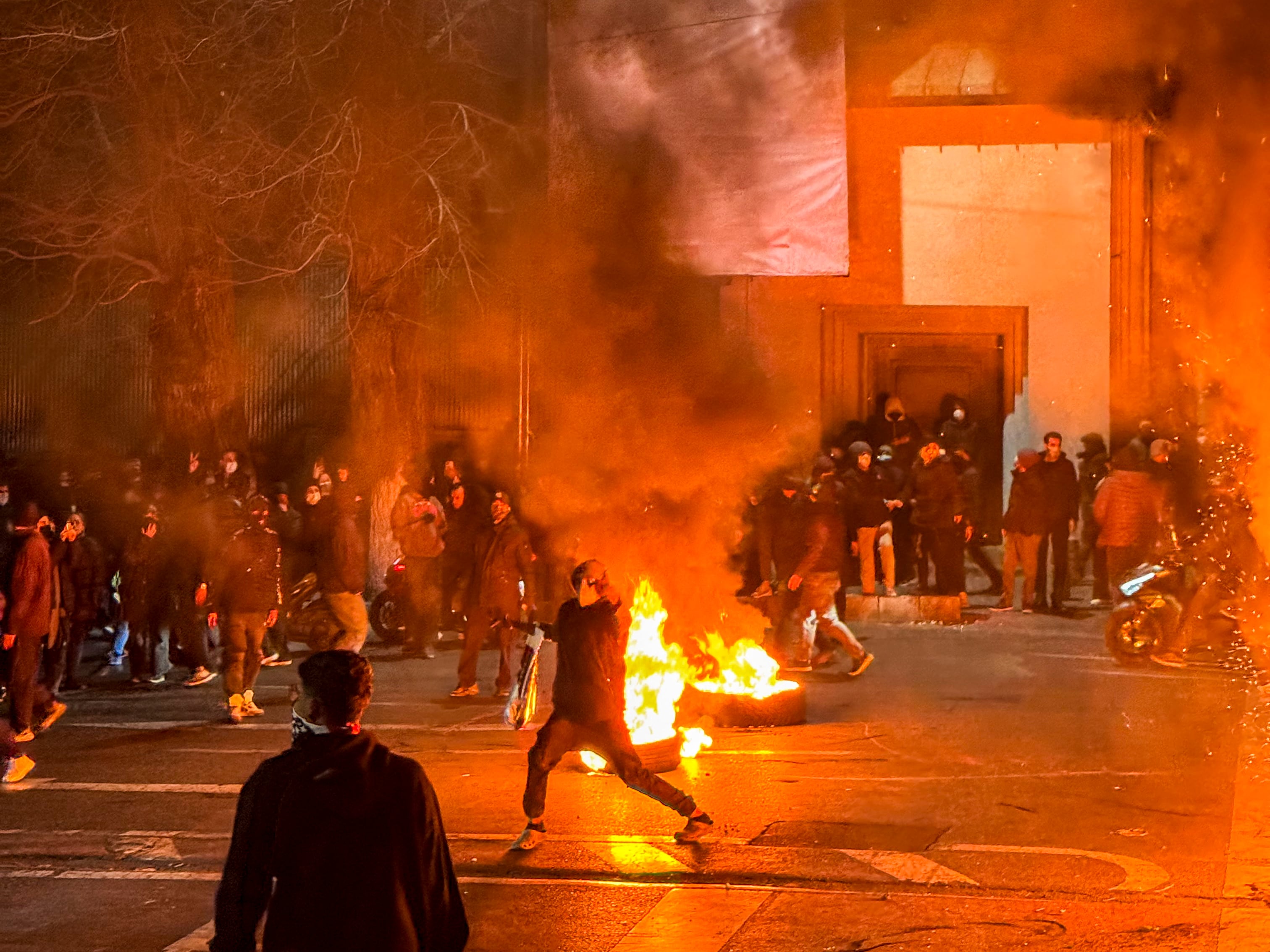
ROME — Cyber attacks on the U.K. noticeably dropped off during the recent protests in Iran, a senior British defense executive has reported.
Clive Higgins, the CEO of Leonardo UK, said that online bot activity promoting the independence of Scotland from the UK reduced as Iranian authorities violently suppressed civil protest this month.
The implication is that Iran has been pushing the cause of Scottish independence through malign cyber activity in a bid to weaken the UK, but slowed its activity as violent protests raged in Iran.
“What has been very interesting over the recent period, given the social unrest in Iran, is the drop off in social media activity and chat bot activity focused on Scotland, elections and independence,” Higgins told Defense News.
On Sunday, Scotland’s first minister John Swinney said he would call for a referendum on Scottish independence if his SNP party wins a majority in Scottish parliamentary elections in May. At a referendum on independence held in 2014, 55% of Scots voted to stay in the U.K.
A report produced by the British parliament’s intelligence and security committee last July said the U.K. was a priority target for Iranian cyber attacks, ranking just behind the U.S. and Saudi Arabia.
“Iran has a high appetite for risk when conducting offensive activity and its intelligence services are ferociously well-resourced,” said committee chairman Kevan Jones at the time. He added, “It supplements this with its use of proxy groups – including criminal networks, militant and terrorist organizations, and private cyber actors – to provide it with a deniable means of attacking its adversaries with minimal risk of retaliation.”
Leonardo has been raising its profile as a cyber security provider, and Higgins said, “We are very clearly aware of the increasing threat from a cyber perspective and our capabilities monitor very regularly state actors who are mobilizing chat bots and social media accounts to disrupt the normal way of life we all enjoy.”
He added, “We are able to see very clearly the actions of state actors where we can identify IP addresses and other elements that articulate to us where things are being done, what kind of messages they are trying to deliver and how they are trying to disrupt U.K. society.”
He said, “There are three or four main state actors. We see a lot from North Korea, Iran, Russia and China. I don’t want to say that is state sponsored activity. It is where the activity derives from.”
Tom Kington is the Italy correspondent for Defense News.