KYIV, Ukraine — Dozens of American- and European-made components are still being used to build Russia’s deadly ballistic missiles despite nearly 24,000 sanctions imposed on Russia-linked individuals and entities since 2022, Ukraine’s presidential commissioner for sanctions policy said last week.
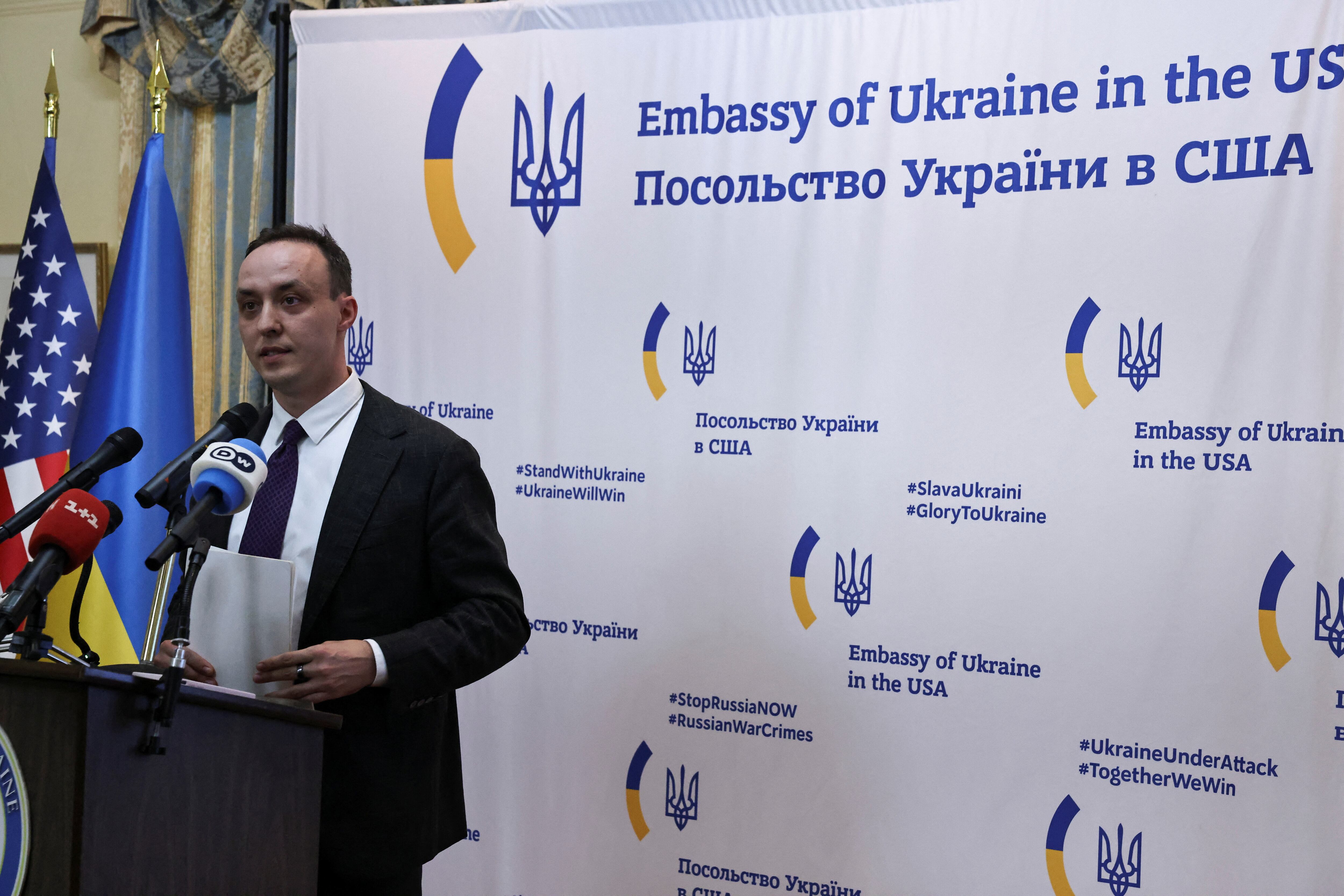
Vladyslav Vlasiuk showed reporters on Aug. 25 foreign-made components recovered from Russian ballistic missiles, laid out on a table adorned with miniature flags marking the parts’ countries of origin.
The display included parts recovered from Iskander missiles and 48N6-family rounds fired from S-400 launchers, with guidance and navigation-related components traced to the United States, Japan, Germany, Taiwan, France, Britain and Switzerland.
One country was overrepresented in the tech spread.
“The United States is the leader,” Vlasiuk said. “In ballistic systems, it is the United States above all, because ballistic missiles are especially demanding in terms of quality and product characteristics.”
The broader pattern is not new. In a 2024 investigation, Ukraine found that roughly 70% of the foreign components recovered from Russian missiles came from U.S. companies, according to RBC-Ukraine.
While the United States has historically been aggressive in enforcing international sanctions, Russian missile makers are still sourcing sensitive electronics through third-country intermediaries that can be replaced almost as quickly as they are sanctioned.
That leaves an enforcement gap that lets Moscow keep acquiring components made by Western-headquartered companies, including Nvidia, Texas Instruments, Analog Devices and Microchip Technology.
Cutting those supply lines matters even more for Ukraine now, as Russia ramps up production of ballistic and high-speed missiles to more than 100 a month, according to military officials, and allies worldwide face a “dire” interceptor shortage precipitated by the outbreak of the Iran war earlier this year.
With partners reducing the supply of Patriot interceptors to Ukraine to about 50 to 60 monthly — a fraction of what’s needed to counter the combined salvos of hundreds of drones and missiles that Russia launches at Ukraine on an almost weekly basis — Kyiv has had to get creative with its antiballistic strategies.
To plug these sanctions gaps, Kyiv wants partners to pass a new set of restrictions on the companies and people supplying foreign electronics and chemical inputs to Russian ballistic manufacturers, along with eliminating the third-country suppliers and routes used to backdoor the components into Russia.
Vlasiuk offered a three-part plan: partners should synchronize designations on every identified Russian ballistic manufacturer across allied jurisdictions; impose sectoral restrictions on roughly 110 materials used in missile production; and tighten export licensing for sensitive electronics and other inputs.
Ukraine wants the EU to pass a small interim package aimed specifically at Russia’s ballistic-weapons chain as soon as September, followed by another package in October, rather than wait for a broader 22nd sanctions package expected no earlier than late October, Vlasiuk said.
The commissioner arrived in Washington on Tuesday to lobby House members to take up the Senate-passed Lindsey O. Graham Sanctioning Russia and Iran Act of 2026, which would address many of these loopholes but has yet to be approved by both houses.
U.S. President Donald Trump largely withheld support for the sweeping Russia sanctions bill for nearly a year after taking office while pursuing peace talks with Russian President Vladimir Putin, before reversing course earlier this year.
Katie Livingstone is the Ukraine correspondent for Defense News and Military Times. Based in Kyiv, she has covered Russia's full-scale invasion since its first days. She is a former Fulbright fellow whose award-winning work has appeared in outlets across Europe and the U.S.


