PARIS — NATO is ready to engage in a potential Arctic mission, but hasn’t started planning one as there has been no political guidance to do so, said Gen. Alexus Grynkewich, the Supreme Allied Commander Europe, after a meeting of the organization’s top military leaders on Thursday.
“We’re aware of discussions about this, of course, and therefore we’re doing some thinking about how we would organize for it, but no planning has started yet,” said Grynkewich, a United States Air Force general, at a press briefing in Brussels.
Grynkewich said NATO’s military headquarters has “a ton of expertise” that could be used to organize an Arctic mission, “whether we call it Arctic Sentry or something else.” European NATO members including the Nordic countries, the Netherlands, France and the United Kingdom have proposed a greater Arctic presence to boost security against potential Russian or Chinese threats.
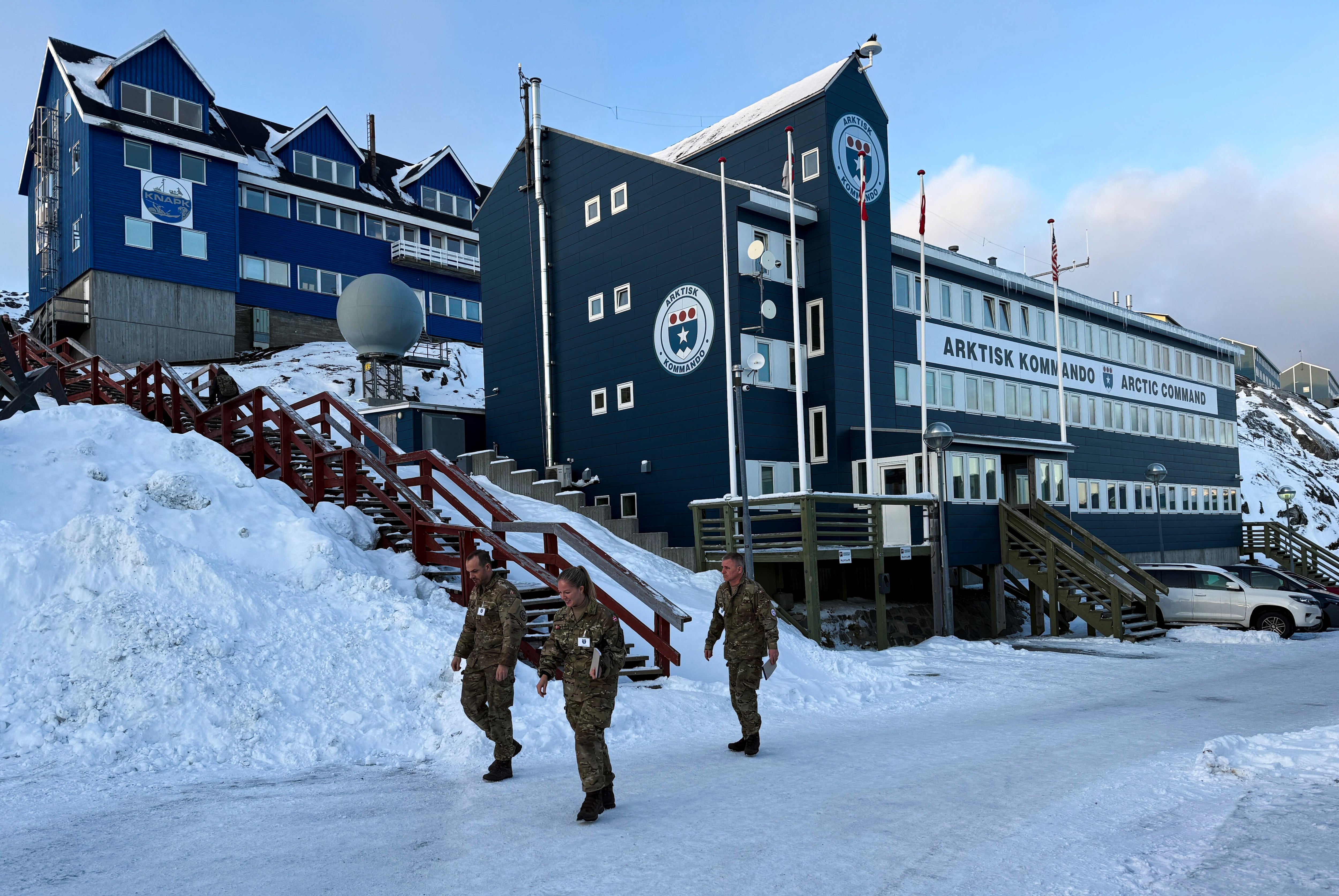
The meeting of NATO chiefs of defense followed a tense week in trans-Atlantic politics, during which Denmark took steps to reinforce its military presence on Greenland after repeated demands by U.S. President Donald Trump to control the island. Trump shocked European policy makers by threatening tariffs on allies supporting the Danish stance, before dropping the threats on Wednesday, citing the “framework of a future deal.”
Thursday’s meeting was “entirely focused on what military leaders are supposed to be focused on, which is ensuring the defense and deterrence of the Euro-Atlantic area,” Grynkewich said. “We, of course, are aware of the political discussions that are going on, but there was never a military dimension to those discussions that made its way down to us.”
The meeting of NATO’s top military leaders was “totally uneventful from this point of view, and totally swift,” said Adm. Giuseppe Cavo Dragone, the chair of the NATO Military Committee.
While NATO command is aware of a framework between Greenland, Denmark and the U.S., “we are still waiting for direction,” Cavo Dragone said. Once there is, “we will start doing our business, which is the military planning and whatever it is necessary to fulfill and to honor the guidance we still have to receive,” he said.
Climate change is transforming access to the Arctic, and the opening of maritime routes makes control of the area “very important” for NATO and countries with a continuous at-sea deterrence, said Adm. Pierre Vandier, Supreme Allied Commander Transformation. He also cited the need to consider “space and ballistic issues,” where global threats NATO faces require looking ahead.
Greenland hosts Pituffik Space Base, where the U.S. operates radars as part of a missile early-warning system. When considering ballistic trajectories, the shortest route between Russian missile launch sites and North America is via the Arctic, including over Greenland.
One of the “most concerning changes in the security situation” is Russia and China increasingly working together in the Arctic in recent years, both in the maritime domain with more joint patrols as well as in the air domain with joint long-range bomber patrols, Grynkewich said, echoing remarks he made earlier this month in Sweden.
NATO is focused on the Arctic, is getting more capability to work and operate in the “challenging” climate there, and will do more in the region, according to Cavo Dragone.
“Some of the things that we need to do in the Arctic to enhance our security are long lead items, including installation of new sensors and detection capabilities,” Grynkewich said. “All of those things are constantly in our cross-check and we’re constantly trying to enhance our posture and think of ways that nations can enhance our posture in the Arctic.”
NATO has several exercises planned in the Arctic in coming months, though none in Greenland itself, the alliance commander said. If NATO is tasked with other vigilance activity, the alliance has “plenty of capacity here,” especially in the maritime and air domain, Grynkewich said.
Grynkewich cited visits to Finland and Sweden earlier this month, saying their militaries “are uniquely positioned to strengthen NATO’s northern flank and Arctic security.”
He said both countries, as well as Norway and Denmark, have “tremendous capabilities that they bring to bear every single day up there,” while other near-Arctic nations also have the ability to operate in the area. “I’m confident that if we’re tasked to do any specific mission or just to continue our general approach to the Arctic, we’re well postured.”
Rudy Ruitenberg is a Europe correspondent for Defense News. He started his career at Bloomberg News and has experience reporting on technology, commodity markets and politics.