WASHINGTON — The Pentagon does not plan on changing its strategy in Iraq, despite the loss of Ramadi to Islamic State forces over the weekend, a pair of DoD spokesmen said Wednesday.
Col. Pat Ryder, a US Central Command spokesman, told reporters the US remains “confident” in its strategy in Iraq, even after the loss of a major Iraqi city to the militant group
best known as ISIS or ISIL.
“We’re confident we have the right strategy at this time to degrade and defeat ISIL,” Ryder said. “You have to look at the bigger picture and how Ramadi is one fight in the larger battle.”
Asked specifically if there were plans to change the US strategy, Pentagon spokesman Col. Steven Warren, Pentagon spokesman, said flatly, “none.”
Asked whether that meant “stay the course,” Warren nodded and repeated the phrase.
That strategy has largely centered around the use of airstrikes to support Iraqi government forces on the ground.
“I think our record speaks for itself,” Ryder said of the use of air power in Iraq.
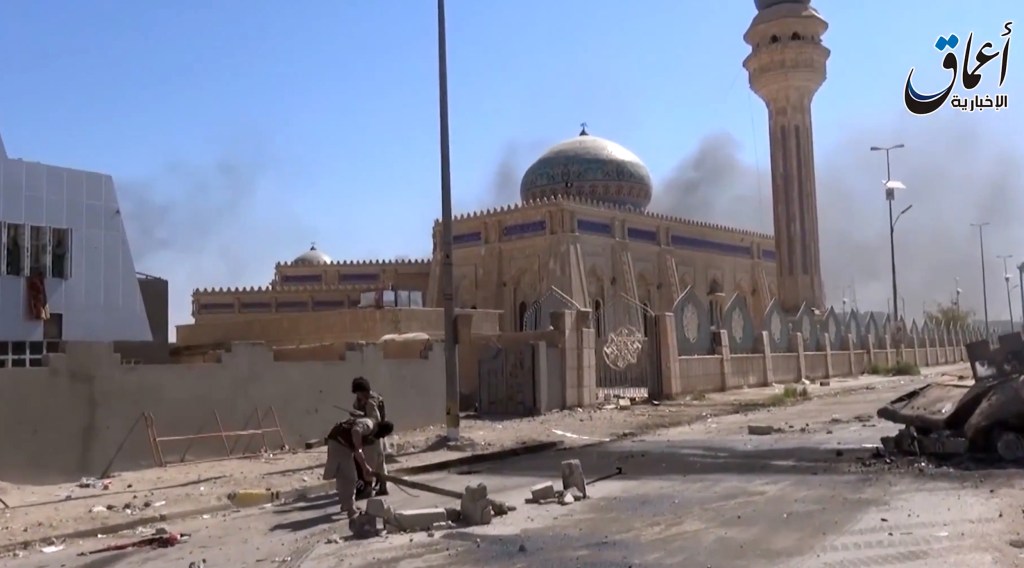
But that record looks damaged following the fall of Ramadi, the capital of Iraq’s Anbar province. The US launched around 160 airstrikes to help defend the city in the past month before ISIL forces claimed the city.
Pushed on the fact that airstrikes did not protect Ramadi, Ryder defended the application of air power against ISIL, asserting that while Ramadi is a “setback” other parts of Iraq have benefited greatly from US actions.
“You can’t look at air power in isolation,” he said. “The coalition airstrikes do exactly what they are designed to do, which is put pressure on ISIL, degrade their combat capability, change their behavior, to change or alter their effectiveness on the battlefield, and it’s done that.”
Ryder also argued that while the strikes were not able to deter ISIL from taking the city, they did inflict significant casualties on ISIL forces that will show through when Iraq’s military moves to take back the city.
The US will support Iraqi plans to take back Ramadi in the “near term,” Ryder added.
While defending the strategy, Ryder did acknowledge there is a need for flexibility in terms of tactics used by American forces.
“Combat isn’t linear — things like fog and friction absolutely require flexibility on the battlefield,” he said. “This is a learning organization. We continually look at how our adversary operates and adjust accordingly. As we say in the Air Force, flexibility is the key to air power. So absolutely we will continue to refine, adapt, improvise and ultimately overcome.”
However, he declined to comment on whether the US is considering changes in the Rules of Engagement in Iraq.