As global missile threats grow in complexity and volume, Lockheed Martin is developing and delivering advanced missile warning, tracking and defense capabilities across multiple orbits to protect America and its allies. From geosynchronous to low Earth orbit, the company is enabling a resilient, responsive space architecture designed to provide early warning and persistent tracking — when every second counts.
For more than two decades, Lockheed Martin has supported this mission as a full-spectrum mission integrator from the Geostationary (GEO) and Highly Elliptical (HEO) orbits, delivering resilient space vehicles, payloads and mission-adaptable ground control systems. This expertise directly informs Lockheed Martin’s support of the U.S. Space Force’s strategy to develop a proliferated, multi-orbit missile warning, tracking and defense space architecture, combined into a broader Integrated Air and Missile Defense (IAMD) network.
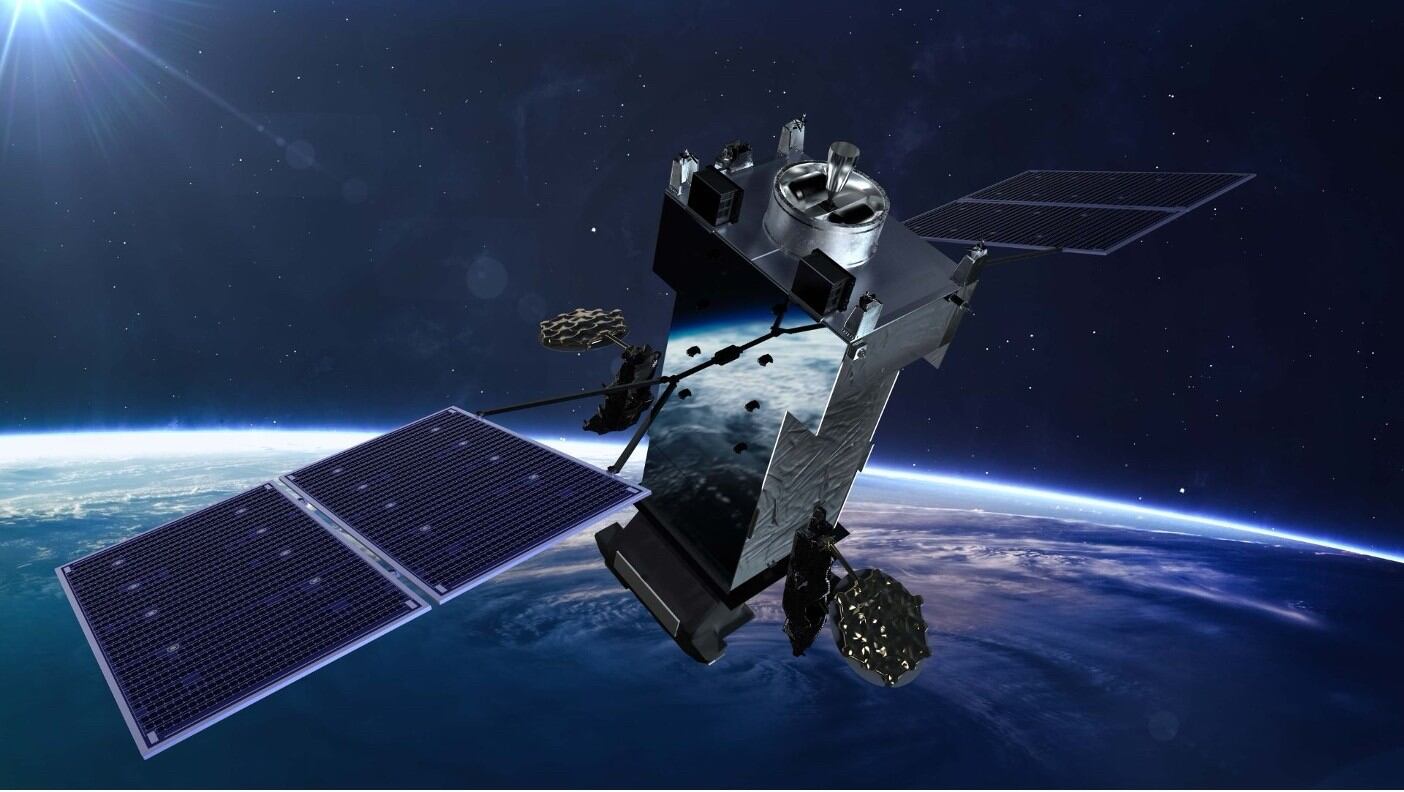
Leading the next wave of capability is the Next-Generation OPIR GEO (NGG) program. The first NGG satellite recently completed environmental testing — including thermal vacuum and acoustic trials — and is now undergoing final systems integration with the OPIR ground system and network validating both new and existing capabilities.
“Next-Gen OPIR GEO will enhance America’s persistent, around-the-clock surveillance of missile threats,” said Joe Rickers, vice president of Transport, Tracking & Warning Programs at Lockheed Martin. “With the first satellite nearly ready to launch, we’re prepared to support the government’s mission to protect America.”
From 22,000 miles above Earth, NextGen OPIR’s infrared sensors will detect a range of threats, including fast-burning launch detection, and tracking of dimmer boosters. Built on the LM 2100™ combat bus, the system includes resiliency features to operate in contested environments.
The satellite will augment and eventually replace the Space Based Infrared System (SBIRS) OPIR satellites — also developed by Lockheed Martin. SBIRS remains critical to national defense, having detected missile attacks on U.S. forces in Iraq, Qatar and Israel in recent years.
“America’s best defense begins with the earliest possible warning — and that starts with what we see in space,” said Jeff Schrader, vice president for Strategy & Business Development at Lockheed Martin.
In low Earth orbit (LEO), Lockheed Martin is simultaneously developing and delivering the Transport and Tracking Layers in support of the Space Development Agency’s (SDA) Proliferated Warfighter Space Architecture (PWSA). This constellation will deliver global, persistent tracking of missile threats, including maneuverable hypersonic glide vehicles. Lockheed Martin has been delivering space vehicles to SDA since Tranche 0, which launched in 2023.
In simple terms, the Tranche 2 Tracking Layer satellites provide global indications, warning, tracking, and targeting of advanced missile threats, including hypersonic missile systems. Under a 2024 contract, Lockheed Martin is building 18 tracking satellites supporting the PWSA. A successful preliminary design review is complete, and critical design review is expected later in 2025.
The company is also building 42 space vehicles for the PWSA Tranche 1 Transport Layer constellation. The Tranche 1 launches are planned for fourth quarter of 2025. These satellites provide assured, resilient, low-latency military data and connectivity worldwide to a full range of warfighter platforms.
“These systems are designed to detect advanced threats and deliver real-time data to decision-makers and ultimately, interceptors,” said Jason Boitnott, program director for Lockheed Martin Space’s Tranche 2 Tracking Layer. “We’ve established the body of knowledge and invested in the infrastructure to deliver at mission speed.”
Across programs like Next-Gen OPIR, and the SDA’s PWSA, Lockheed Martin is advancing a layered, space-based missile warning, tracking and defense architectures. As threats evolve, Lockheed Martin is moving swiftly to ensure warfighters are equipped with timely, actionable information — and remain ahead of ready.