-

Intel agency mapping the moon to support future lunar navigation
The NGA is working with several government agencies to develop a Lunar Reference Frame that would undergird a future GPS-like capability for the moon.
-

Geospatial-intelligence agency making strides on Project Maven AI
The project was created in 2017 to take data, imagery and full-motion video from uncrewed systems, process it and use it to detect targets of interest.
-

The next Army recruiting tool amid a slump? It could be the metaverse.
The U.S. Army missed its fiscal 2022 recruiting goal by thousands of new soldiers, leaving it shorthanded.
-

Pentagon seeks approval to fund NATO defense technology accelerator
The program was created in 2022 to support cooperation among allied nations on emerging technology challenges.
-

Fur-midable: US Air Force pairs Angry Kitten jammer with Reaper drone
Angry Kitten’s name is a brew of inside joke and design goals, and is a departure from the typically terrifying military moniker, like Hellfire or Stryker.
-

Space Force may seek new bidders for future deep-space radars
The service wants to see if any companies besides Northrop Grumman can meet its schedule for future phases of the Deep Space Advanced Radar Capability.
-

Airbus tees up new surveillance drone with ‘Made in Spain’ tack
The vendor has marketed the envisioned drone as a suitable option for low-budget air forces seeking advanced capabilities.
-

Lawmakers seek special focus on autonomy within Pentagon’s AI office
“If we’re going to have unity of purpose, it needs to be in a single place,” said Rep. Rob Wittman, R-Va., a member of the House Armed Services Committee.
-

Pentagon tests joint warfighting technology during TREX exercise
The exercise supports the Pentagon’s Rapid Defense Experimentation Reserve, which funds technology prototypes that can meet near-term military needs.
-
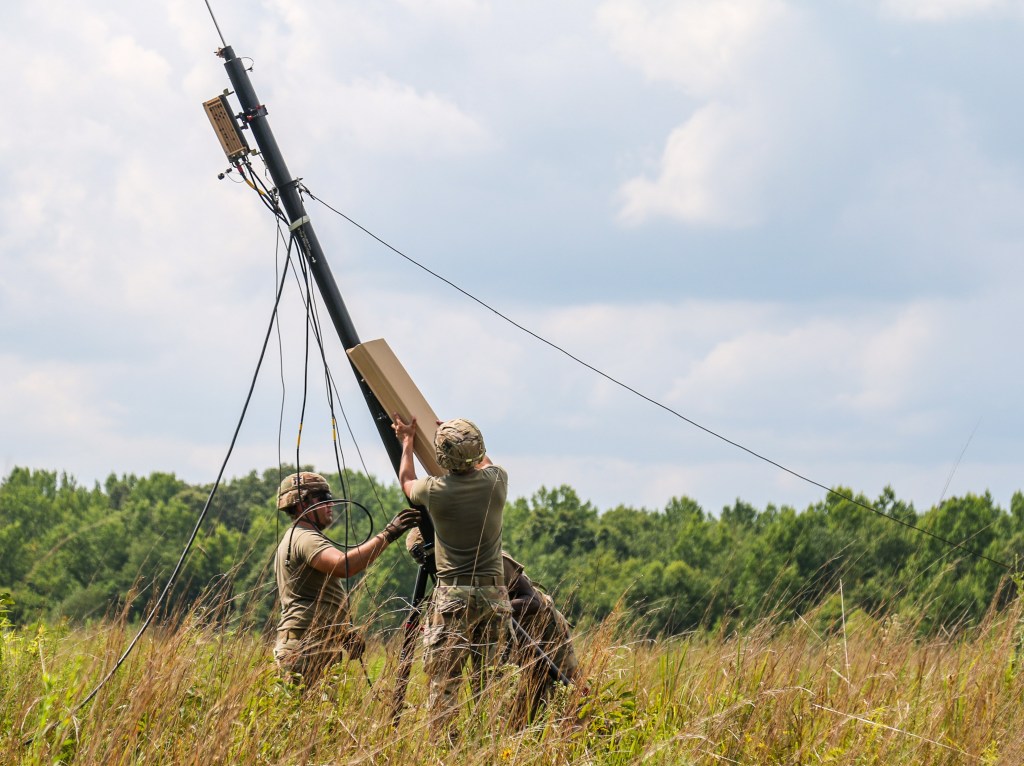
For command post survival, US Army wants more mobility and concealment
Command posts of the past were relatively stationary, cumbersome to set up and break down, and often identifiable by the heat and noise they emit.
-
Intel agency mapping the moon to support future lunar navigation
The NGA is working with several government agencies to develop a Lunar Reference Frame that would undergird a future GPS-like capability for the moon.
-
Geospatial-intelligence agency making strides on Project Maven AI
The project was created in 2017 to take data, imagery and full-motion video from uncrewed systems, process it and use it to detect targets of interest.
-
The next Army recruiting tool amid a slump? It could be the metaverse.
The U.S. Army missed its fiscal 2022 recruiting goal by thousands of new soldiers, leaving it shorthanded.
-
Pentagon seeks approval to fund NATO defense technology accelerator
The program was created in 2022 to support cooperation among allied nations on emerging technology challenges.
-
Fur-midable: US Air Force pairs Angry Kitten jammer with Reaper drone
Angry Kitten’s name is a brew of inside joke and design goals, and is a departure from the typically terrifying military moniker, like Hellfire or Stryker.
-
Space Force may seek new bidders for future deep-space radars
The service wants to see if any companies besides Northrop Grumman can meet its schedule for future phases of the Deep Space Advanced Radar Capability.
-
Airbus tees up new surveillance drone with ‘Made in Spain’ tack
The vendor has marketed the envisioned drone as a suitable option for low-budget air forces seeking advanced capabilities.
-
Lawmakers seek special focus on autonomy within Pentagon’s AI office
“If we’re going to have unity of purpose, it needs to be in a single place,” said Rep. Rob Wittman, R-Va., a member of the House Armed Services Committee.
-
Pentagon tests joint warfighting technology during TREX exercise
The exercise supports the Pentagon’s Rapid Defense Experimentation Reserve, which funds technology prototypes that can meet near-term military needs.
-
For command post survival, US Army wants more mobility and concealment
Command posts of the past were relatively stationary, cumbersome to set up and break down, and often identifiable by the heat and noise they emit.