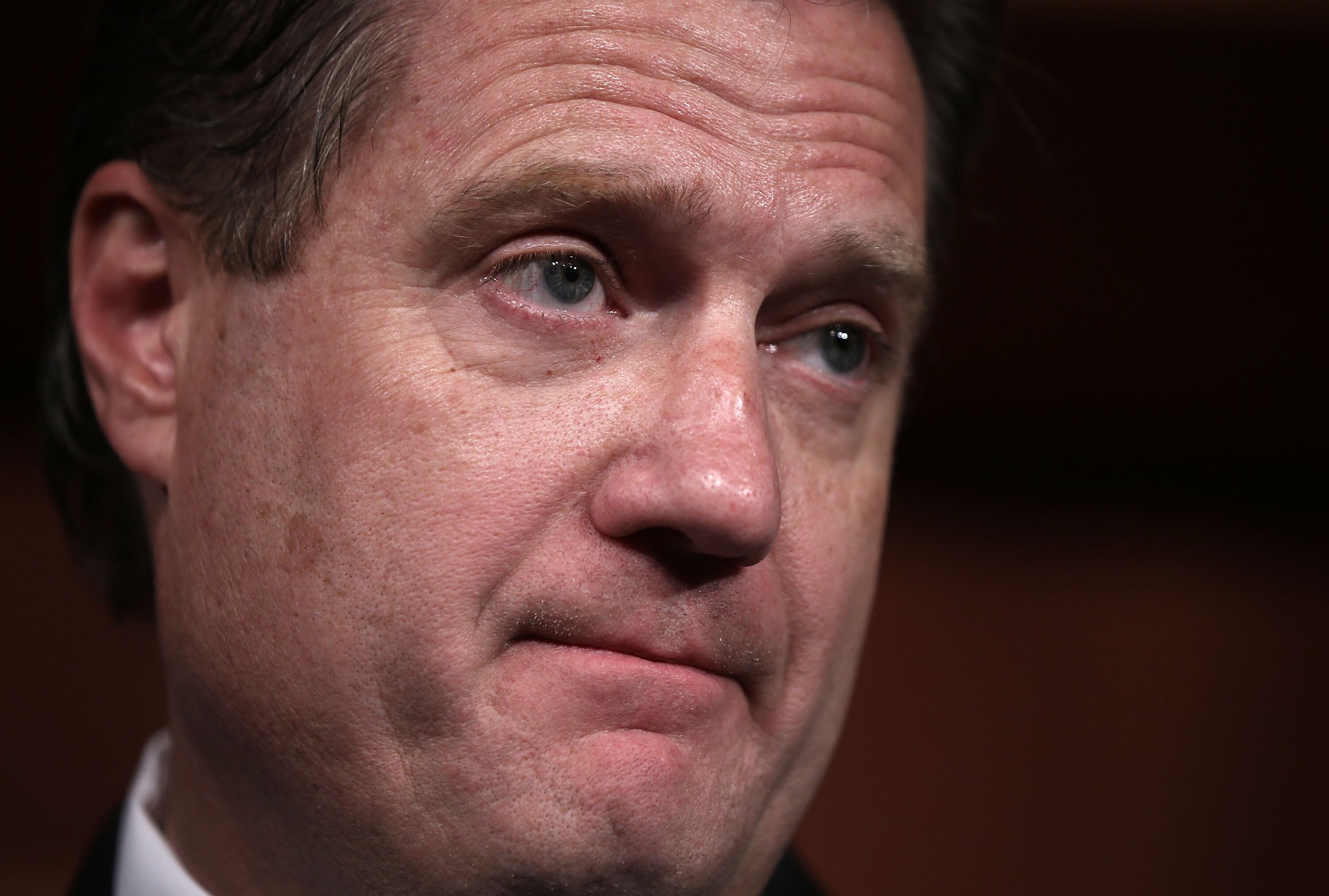
There was no Frank Underwood from Season 1 of the Netflix series "House of Cards" twisting the arms of headstrong pro-military colleagues last week in some humid House anteroom. Still, the backroom back-and-forth about a Republican-crafted 2016 budget resolution could have been the plot of an episode of the Washington drama.
It would not be a stretch to imagine Underwood, in his upstate South Carolina drawl, asking House Armed Services Committee members, "Gentlemen, how much do you need? What will it take to win your support?"
But this wasn't TV. It was real-life legislating in the capital of the free world.
House defense hawks decided to play hardball on the 2016 GOP budget resolution: Either clear the way for more military spending or put us down as "no" votes when the plan hits the floor, 70 of them told House Budget Committee Chairman Tom Price, R-Ga., and Speaker John Boehner, R-Ohio.
It was a tactic straight out of the now-famous tea party — now called the Freedom Caucus — playbook.
"Seventy individual members have made it clear that a budget that fails to fully fund defense will not pass the House of Representatives," said House Armed Services Committee member Michael Turner, R-Ohio.
As always for leadership, it comes down to math. The threshold for passage in the House is 217. Losing 70 defense hawks would leave GOP leaders with 147 votes. And because not even a budget resolution that would reduce federal spending by $5.5 trillion cuts deeply enough for the far right, the actual number of votes House leaders can count on would be even smaller.
GOP leaders want to pass a budget resolution for a host of reasons. So they need just about every one of those hawk votes.
Washington is not quite as ruthless and ethically challenged as it's depicted on "House of Cards." But votes are being traded for defense dollars.
John T. Bennett
Photo Credit: Mike Morones
And the House hawks are sticking together, for now at least, and could force Price and GOP leaders to put more and more to the immune-from-spending-caps war fund.
Turner, a HASC subcommittee chairman, led the hawks' threat-making. Then on March 19, he told reporters the caucus would likely support a budget resolution "as long as it fully funds defense." But what number equals "fully funded"? Is it $613 billion, $615 billion, $620 billion? Why not $635 billion? Leverage is leverage — use it or lose it.
House leaders want to bring a budget blueprint to the floor this week and approve it before a two-week recess period.
In "House of Cards," a recalcitrant hawk might jot down a number on a sheet of paper and slide it across a table toward Underwood and other House leaders. Underwood likely would study the note for a moment, then say something folksy and condescending before agreeing to the number.
But that's just the stuff of television, right? Surely Turner and a few other hawks won't again threaten to walk before sliding a to-be-shredded note with a big number across the table?
HASC Chairman Mac Thornberry, R-Texas, advised reporters that before the resolution is ready for a floor vote "there's lots more steps to come."
Small steps can lead to big dollars when political embarrassment is at stake. What will it take, gentlemen? ■