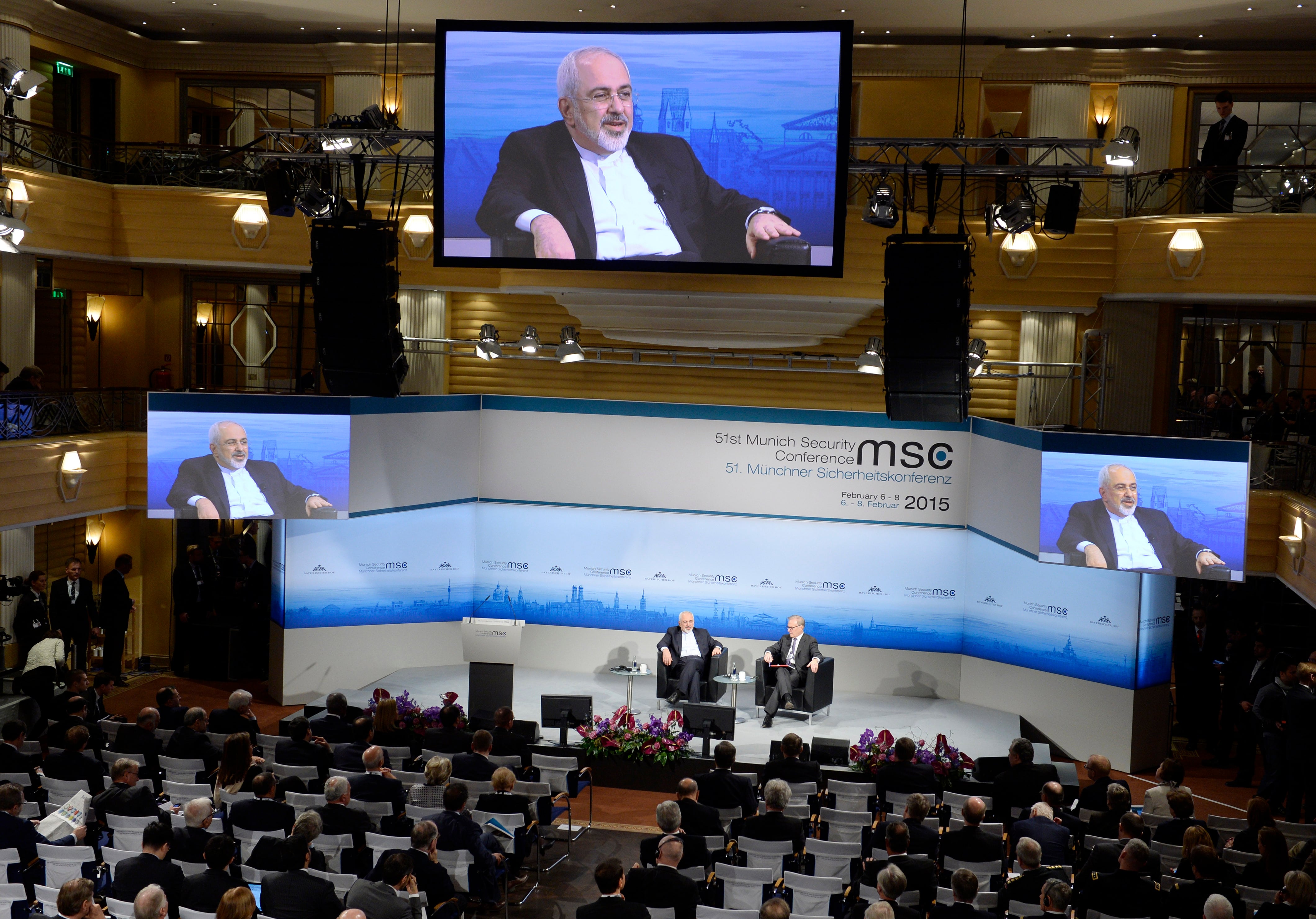
TEL AVIV — A war of words erupted between Israeli Minister of Intelligence Yuval Steinitz and the foreign ministers of the Palestinian Authority, Riyad Al-Malki, and Qatar, Khalid Mohamed Al-Attiyah, at the Munich Security summit on Sunday.
In a convoluted chicken vs. egg style argument, the three quarreled over whether the Israeli-Palestinian conflict is responsible for the unrest in the Middle East or if the region's tumult is fanning the flames of the decades-long conflict.
"At the end of the day people have to go back and look at this issue that has been with us for many years — the Israeli-Palestinian question," Al-Malki told the audience.
"The Israeli-Palestinian peace process, or the conflict, is the main igniter to all the turbulence in the Middle East," Al-Attiyah said.
Steinitz, for his part, cited radical jihadist groups such as ISIS and Hezbollah and the looming nuclear Iranian threat as the two main sources of instability in the region.
"Those two [elements] have nothing to do with the Israeli-Arab or Israeli-Palestinian conflict," he asserted. "We want to achieve peace, but don't create the illusion that suddenly we will have an agreement like we have with Egypt and Jordan and suddenly Iran will change or jihad groups will disappear."
According to Steinitz, the violence rocking the region has made cementing any sort of peace agreement a hard sell to the Israeli public.
"Regardless of the unraveling of the Middle East around us, it becomes more difficult to convince the Israelis that, around the chaos in the Middle East, that with concessions, they can get not just a piece of paper, but genuine peace and real security," said Steinitz, who is considered a trusted confidant of Israeli Prime Minister Benjamin Netanyahu. explained.
"And why is this so difficult? Because, unfortunately, Arabs in the Middle East are not getting real peace and real security amongst themselves," he added.
Rejecting that premise, Al-Malki responded, issued a rejoinder saying, "When we started the peace process with Israel 23 years ago, there was no Da'ash, Iranian nuclear threat or jihadist movement. So the question is — why were we not able in the last 23 years to achieve a peace agreement with Israel?"
The foreign minister asserted that only withdrawing to pre-1967, Six Day War borders and ending the "occupation" of the Palestinian Territories, could peace in the region come to fruition.
Framing the resolution of the Israeli-Palestinian conflict as the linchpin to anchoring the region is hardly a new theory. For example, US President Barack Obama invoked this idea when visiting Israel in March 2013.
Addressing a hall of Israeli students in Jerusalem, Obama said, "this is precisely the time to respond to the wave of revolution with a resolve for peace. As more governments respond to popular will, the days when Israel could seek peace with a handful of autocratic leaders are over. No one step can change overnight what lies in the hearts and minds of millions. But progress with the Palestinians is a powerful way to begin, while sidelining extremists who thrive on conflict and division."
After peace negotiations collapsed last April, the Munich conference seemed to provide the first serious backdrop to bringing the parties back to the negotiating table.
The Middle East Peace Quartet, which consists of the United States, European Union, United Nations and Russia, announced, that, "The Quartet underlined the importance of the parties resuming negotiations as soon as possible," Reuters reported.
With the Israeli government headed for elections March 17, it is highly unlikely talks will gain traction before a new government is formed.
Email: noa.amouyal@gmail.com.