WASHINGTON — The US Army National Guard director plans to deliver in the next few weeks recommendations to the Army chief of staff on Guard maintaining Guard readiness and training that better fits with a 21st century Army force, he said today at an Association of the United States Army breakfast.
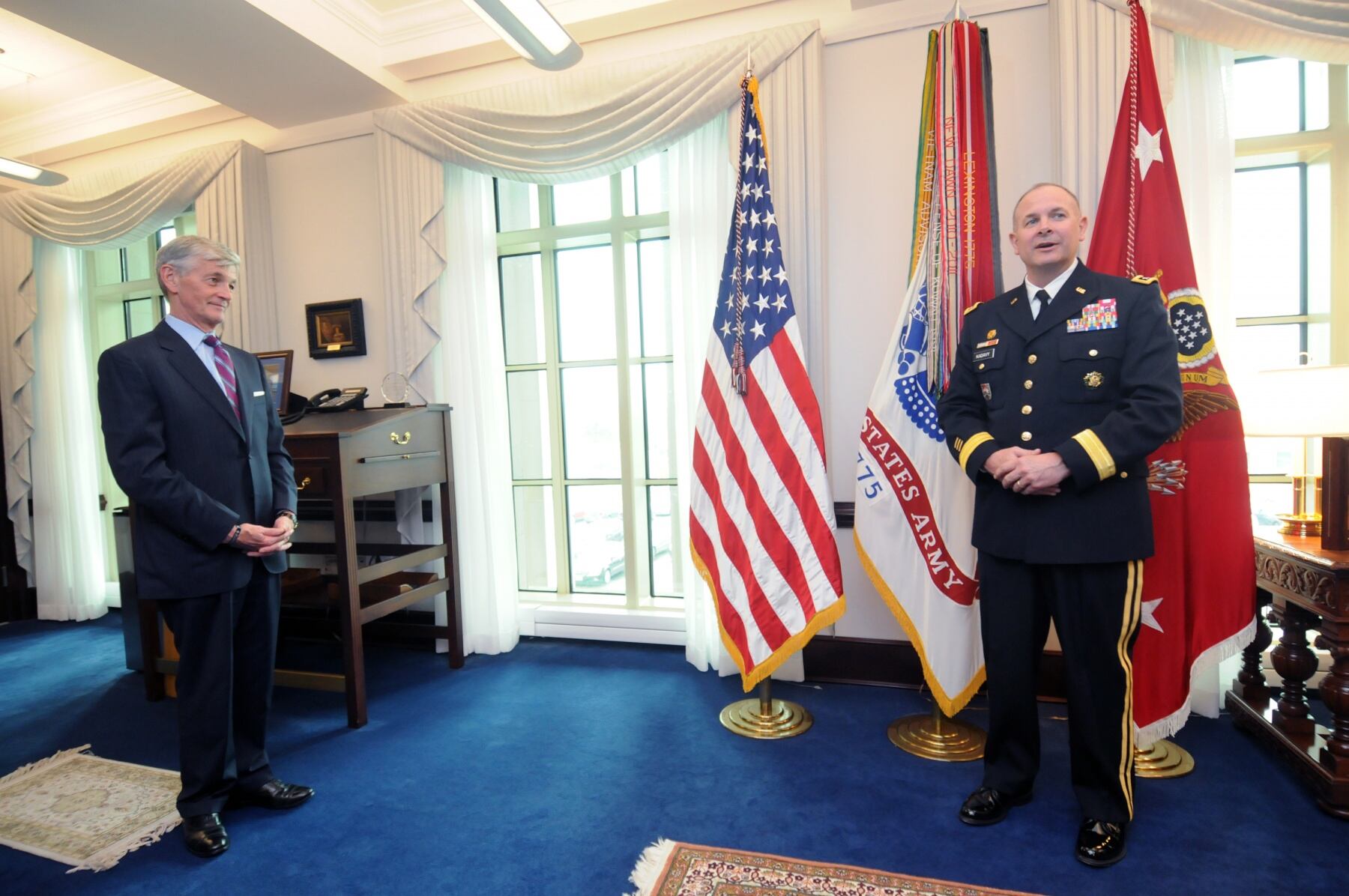
Army Chief Gen. Mark Milley has "asked me to relook and come back to him on how the Army National Guard trains and maintains readiness, and we are cooperatively working on these initiatives with the Army staff, with the Army secretariat, as well as the [Forces Command] team," Lt. Gen. Tim Kadavy said.
While Kadavy said he didn't know when or how the chief would ultimately decide to implement any of the recommendations, "I know he wants to implement some of these changes fairly quickly so I would anticipate some integration announcements related to the round up and round out of organizations in the future, integration between all three components in the Army Guard, the active component and the Army Reserve."
Milley has repeatedly stressed in his 90 days as Army chief that his number one priority is making sure the total force — all three Army components — is ready to fight or respond in a modern and unpredictable world.
Milley has asked Kadavy, for instance, to look at whether the number of combat training center rotations for the Guard's brigade combat teams and whether 39 days of annual training for Guardsmen is adequate.
The chief also wants to know "how do we operationally use and continue to use the National Guard and the Army Reserve and what does integration look like today and into the future," Kadavy said.
Some of the laws and policies which program how the National Guard trains, mobilizes and deploys were developed in the early 1900s under militia acts, Kadavy said.
Is the Guard's readiness still "answered by the laws written and codified by laws in the early 1900s?" he asked.
Taking a fresh look at how the reserve component will be used and what training and equipment it needs comes at a critical juncture as the wars in the Middle East wind down but instability and violence grows around the world. Some are worried the reserve component will lose the readiness it's built up fighting in the Middle East for well over a decade.
"Operational is not a threshold; it's a continuum," Kadavy said.
While Kadavy did not detail what specifically he might be thinking of recommending to Milley when it comes to training days and rotations, he did say that keeping the National Guard as part of the operational force is "key and critical."
Kadavy said that the 39 days-per-year training requirement for Guardsmen requires two days a month for drills and 15 days for summer training, adding that 39 days "is a floor, not a ceiling."
Even so, there is policy that prevents the Guard from spending too much money on training, Kadavy said.
If the Army chief ultimately decides to change the training requirements, funding would need to be accounted for, Kadavy said.
"You have to think about the pay and allowances that go along with paying for days you utilize [Guardsmen] for either training or operational purposes," he said.
The National Guard also is looking at international training opportunities to keep operational skills from atrophying as well, Kadavy told a few reporters after the breakfast.
US Army Europe Commander Lt. Gen. Ben Hodges has said more participation from the National Guard in the European theater would be welcome as the Army there is already "paper thin" as Russia continues to be a bellicose, and therefore worrisome, neighbor to Eastern European countries. And National Guard Bureau Chief Gen. Frank Grass said last month that he is looking into how the National Guard's role in Europe might grow. Discussions are ongoing about how some European Reassurance Initiative dollars could fund Guard activities in Europe.
How the Guard might be used in Europe is part of the recommendations Kadavy said he owes Milley. He said using Guardsmen in training exercises in Europe benefits the Guard in building readiness, but also provides capability to US Army Europe at the same time.
Kadavy said he's looking at similar opportunities to participate in training exercises like Pacific Pathways in the Asia Pacific.
"We have limited capability using overseas deployment training dollars," he said, "so we will make some recommendations and we will make some decisions, but in this fiscally constrained period we are constrained with everything we do based on the resources available."
Email: jjudson@defensenews.com
Twitter: @JenJudson
Jen Judson is an award-winning journalist covering land warfare for Defense News. She has also worked for Politico and Inside Defense. She holds a Master of Science degree in journalism from Boston University and a Bachelor of Arts degree from Kenyon College.