WASHINGTON — The National Guard's powerful lobbying arm is pushing for a legal requirement that the Guard report what it needs to respond to domestic emergencies, a way to highlight gaps for the Pentagon and for Congress to fill.
While the top priority at National Guard Association of the United States (NGAUS) is still an end to sequestration and avoiding a continuing resolution to fund the government that could last a year, its president, retired Maj. Gen. Gus Hargett, said he is watching several other issues: the AH-64 Apache transfers from the Guard to the active component, full-time manning and the reporting issue. All of the above are in play as the House and Senate conference to reconcile their versions of the National Defense Authorization Act (NDAA).
"Number one for us is killing sequester, and that should be number one for everybody because that leads to all these bad things," Hargett said.
Reporting Requirement
Language in the NDAA that passed the House would have the Guard reconcile what it takes to man, train and equip for its domestic operations-plans against its existing resources, a proposition Hargett said could has the potential to shift reshuffle Guard resources between states and regions to where they are needed — though the Guard could also use the reports to justify requests to Congress for more personnel and equipment.
"For the non-federalized requirements, we need to identify those [requirements] and report those, I agree with it, but it's not like we have failed with what we have," Hargett said. "It enables Congress and the Department of Defense to know what the requirement is, and right now, nobody knows."
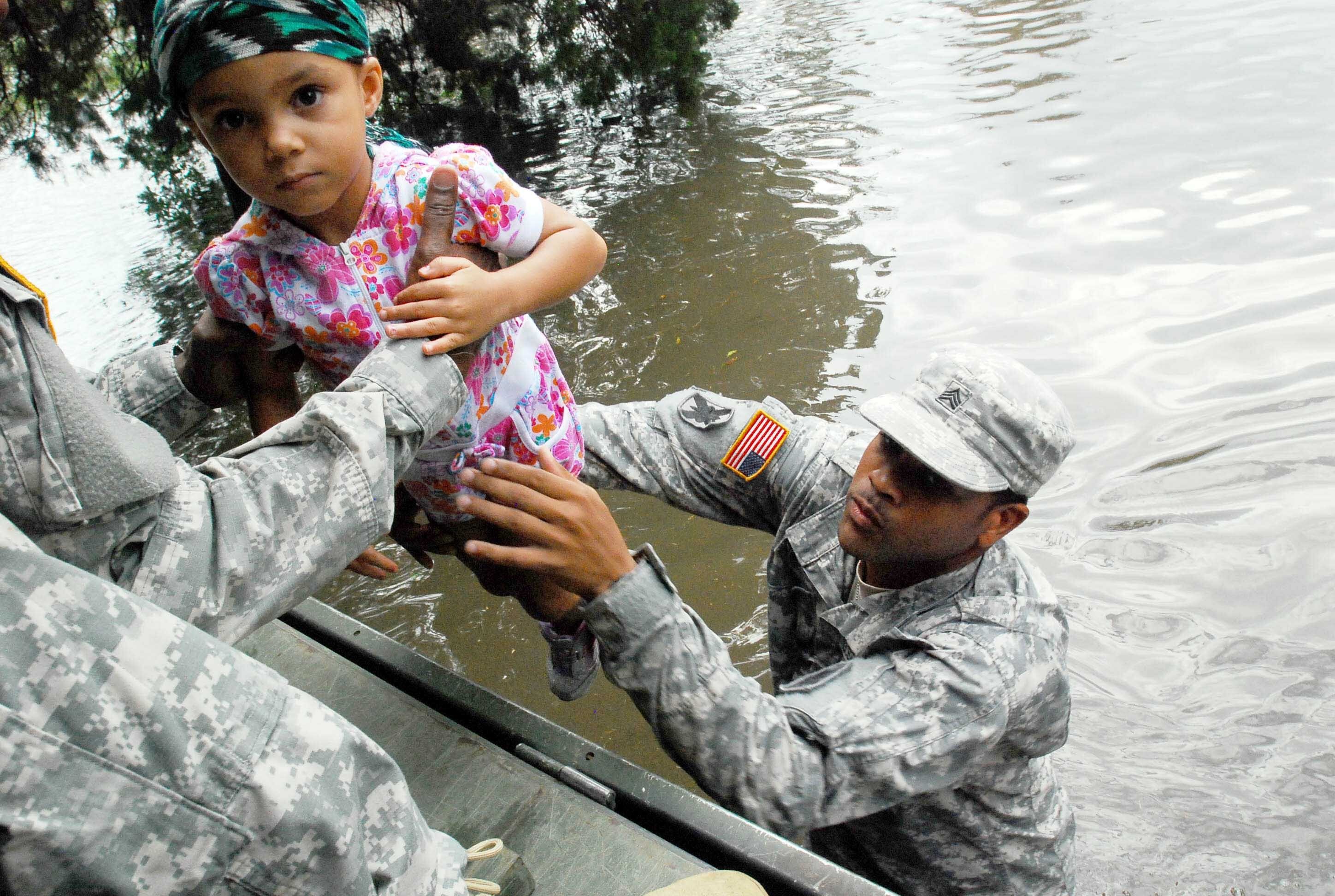
The National Guard is already simulating certain catastrophic events to which it might respond; in recent weeks a mega-quake off the coast of Washington sState that might require 100,000 guardsmen, for example. The idea is then would be, from there, to formally quantify any needed assets, from vehicles, communications and other materiel to a regional division headquarters.
"It might be you have those things, but they're in the wrong place," Hargett said. adding later: "I believe it makes Congress, DoD and the [Federal Emergency Management Agency] more capable to know who does what to whom and who has the equipment to do it."
Informed by Hurricane Katrina 10ten years ago, when it took the National Guard days to make a substantive response, the Hurricane Sandy response in 2012 was saw vastly more coordinated with much improved unity of effort, and of command and control, Hargett said. The proposed reporting requirement could lean on disaster relief "wargames" for even even better planning.
"It's going to be a hell of a process, once we figure it out, but we don't know what we don't know," Hargett said.
Of the House and Senate versions of the NDAA, the House language supported by NGAUS is more comprehensive, but potentially more expensive to fulfill. It would require the chief of the National Guard to submit an annual report to Congress and the defense secretary detailing its requirements for personnel, training and equipment needed to carry out non-federalized missions in support of civilian authorities.
Under federal law, the chief of the Guard must already report to the defense secretary and Congress on its readiness for federal service, typically satisfied by the Guard's annual posture report. Language in the NDAA that passed the Senate would add to that report a section that addresses the Guard's non-federalized role but is less prescriptive than the House so far as to what information the Guard must share.
Sen. Patrick Leahy, D-Vt., co-chair of the Senate National Guard Caucus and a senior member of the Appropriations Committee's defense subcommittee, introduced the Senate language as a step toward better coordination between the Guard and active components.
"It's about time we plan ahead for massively coordinated responses to large-impact disasters in America," Leahy said. "The first step is getting some transparency in the preparedness of a governor's first response force, the National Guard, both in terms of personnel and equipment. This is already done at the state level and even some at the regional level. It's time to get it done at the national level, too."
Apache Transfers
The National Guard has fought vehemently to prevent its fleet of AH-64 Apache attack helicopters from being transferred to the active force since the Army first proposed the move as part of its larger plan to restructure its aviation assets.
Both the House and Senate agree in their versions of the authorization bill that the Army should not be allowed to transfer Apaches beyond 48 authorized in fiscal 2015 until after the National Commission on the Future of the Army issues its report early next year. The commission is tasked to examine the plan as part of a larger study on the service's entire force structure and is due to deliver recommendations to Congress by Feb. 1.
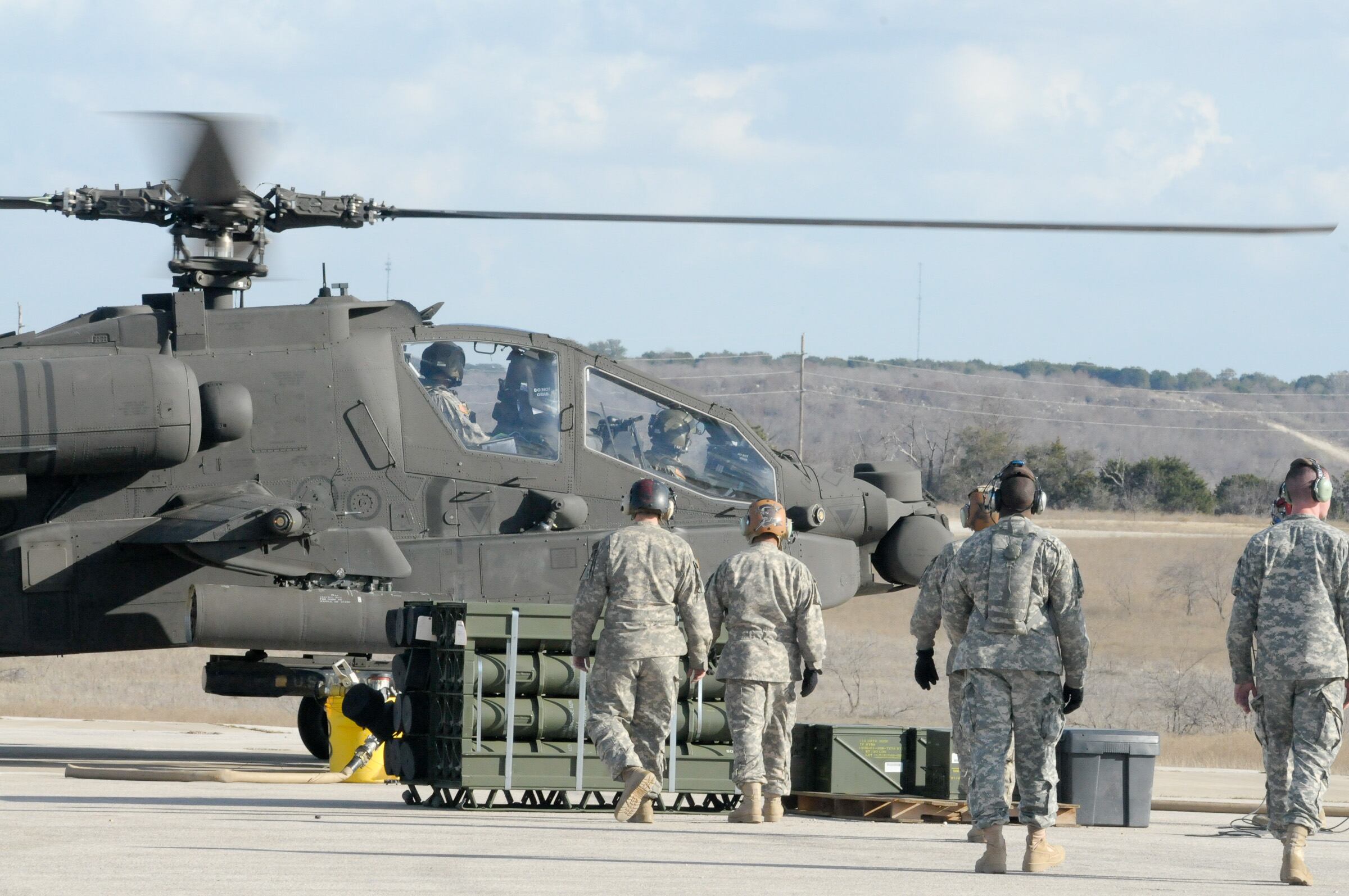
Pilots with the Texas Army National Guard's 1-149th Attack Reconnaissance Battalion land an AH-64 Apache attack helicopter at the forward arming and refueling point on North Fort Hood, Texas.
Photo Credit: Courtesy
But there are differences in approach. the two chambers differ in the length of time the Army would be barred from moving the attack helicopters out of the Guard and into the active component.The Senate's version would halt the further Apache transfers beyond the initial tranche of 48 until six months after the commission issues its report; and the House version of the bill would prevent any further transfers until after June 30.
Hargett said it's essential the commission issue recommendations on the issue before any more Apaches are removed from the Guard because it would be hard to move Apaches back into the reserve component. "It only becomes non-reversible when you go beyond the 48," he said.
The Senate also included language in its version of the bill that would count D-model Apaches already taken out of the Guard and sent to Apache-manufacturer Boeing to be converted to the latest E-model variant as part of the authorized group of 48 helicopters. The Army secretary would be required to submit a report accounting for those helicopters within 90 days after the legislation passes.
"The Secretary of the Army shall treat the number of helicopters specified in the report as counting against the total number of AH-64s that may be transferred from the ARNG to the regular Army," according to the legislation.
Full-Time Manning
Critics of maintaining the current levels of full-time National Guard support personnel say it expanded during the wars in Iraq and Afghanistan and now should be reduced as the wars wind down.
But, according to Hargett, a robust level of full-time soldiers and civilians was considered necessary a need since before the start of both wars.
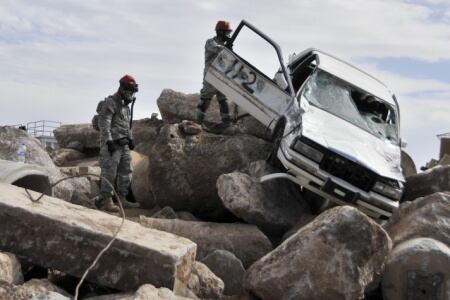
Members of the California Army National Guard participate in a 2011 exercise in Arizona.
Photo Credit: California Army National Guard
Retired Gen. Ray Odierno, as a brigadier general in charge of Army Forces Command, called to ramp up full-time manning for the reserves, stating in a December 2001 memo that these full-time personnel serve as "critical links to integration and interoperability among Army components," and that an increase of this support "is essential to the future of the Army."
The Senate version of the NDAA, Hargett said, would prevent 1,800 full-time positions from being eliminated. The House version contains no such language, but the absence of a provision does not indicate opposition, according to Hargett. NGAUS was unable to brief the House on the need in time to get language in its version of the bill, he explained.
In addition to plussing up full-time support personnel, the Senate also would authorize an end-strength of 345,000 Guardsmen in fiscal 2016, 3,000 soldiers higher than the House authorized. Hargett said he's not satisfied with either proposed end-strength because the Guard association would prefer to see the Guard's end-strength numbers in fiscal 2015 of 350,000 stay the same in 2016.
Email: jgould@defensenews.com and jjudson@defensenews.com
Twitter: @reporterjoe and @jenjudson
Jen Judson is an award-winning journalist covering land warfare for Defense News. She has also worked for Politico and Inside Defense. She holds a Master of Science degree in journalism from Boston University and a Bachelor of Arts degree from Kenyon College.
Joe Gould was the senior Pentagon reporter for Defense News, covering the intersection of national security policy, politics and the defense industry. He had previously served as Congress reporter.