WASHINGTON – The US Air Force's point man on space acknowledged Friday what he called "clear" direction from Congress to move away from the Russian-made RD-180 rocket engine, but warned there are many details to be worked out before a replacement is selected.
"The language is clear," Gen. John Hyten, head of Air Force Space Command, told an audience at an Air Force Association event. "The intent of the congress is to get off the RD-180 by FY19."
Hyten was referring to language in the compromise National Defense Authorization Act that prohibits the use of the RD-180 for military space launch starting in fiscal 2019. The language is very close to what Sen. John McCain, R.-Ariz., had requested in the Senate Armed Services Committee markup of the NDAA, a position the Air Force had opposed as too limiting.
The RD-180, a key component in the United Launch Alliance (ULA) Atlas V launch vehicle, has become a source of controversy since Russia's invasion of Crimea. ULA has a monopoly on military space launch through the Air Force's Evolved Expendable Launch Vehicle (EELV) program.
The NDAA language also mandates the development of a new, American-made replacement for the engine. The Air Force has begun laying the groundwork for what the engine could look like, but there are still many questions, something Hyten alluded to in his comments.
"So with that clear intent, assuming appropriations follow, we have a lot of work to do to figure out how to work the future of our launch enterprise," he said. "And it's going to be a challenge to figure out how to get there by '19."
"We have that direction and now we have to go," he added. "Like I said, a lot of work to do. We'll see how it comes out at the end of the game, it's still pretty early, but still a lot to figure out there."
There is some work already being done to produce an alternative to the Russian engine. ULA has teamed with Seattle-based Blue Origin to offer an alternative to the RD-180, while Aerojet Rocketdyne is developing its own solution; other potential players may still emerge.
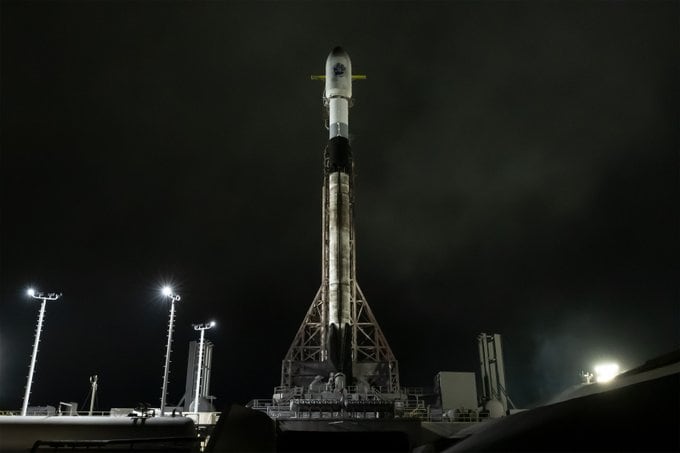
Another alternative to the RD-180 could come in the form of SpaceX, the Elon Musk founded company that seeks to challenge ULA's dominance of the EELV program.
In September, Hyten said he hoped to have SpaceX certified by December 1. While that hasn't happened, he told reporters after Friday's event that the company was close to becoming certified for launch.
"We're very close," Hyten said. "We had one big design review they had to go through last Friday. The next big session is Monday of next week, and after that we'll get with them, define exactly where they stand and we should have an answer this month."
After clarifying that he expects certification to come before the end of the year, Hyten added, "we still have some details to go because we're not going to certify someone before they are fully ready."
Hyten also confirmed that no other companies have begun the certification process, which Musk has derided as unnecessarily complex and the Air Force has cast as thorough. ■
Email: amehta@defensenews.com.
Aaron Mehta was deputy editor and senior Pentagon correspondent for Defense News, covering policy, strategy and acquisition at the highest levels of the Defense Department and its international partners.