WASHINGTON — As the clock ticks toward the fiscal year's end Sept. 30, without a deal in the US Congress to fund the federal government, all signs point to a stopgap bill to avert a shutdown and buy time for 2017 spending legislation to be negotiated and passed after the Nov. 8 general election.
But debate over the duration of the continuing resolution to fund the government is causing heartburn for the Pentagon and defense industry. That's because continuing resolutions, unless exceptions are included, ban new-start acquisition programs and continue funding at the last year's level.
Some House conservatives, banking Republicans will do well in elections, favor a stopgap spending bill that stretches into 2017, though consensus is building around a CR that ends in mid-December.
The Pentagon's top weapons buyer, Frank Kendall said Pentagon leaders are "continuing dialogue" on Capitol Hill over defense spending and the annual National Defense Authorization Act, which is being negotiated by top lawmakers on defense.
"There were a lot of things that we need to get adjustments on in the authorization bill, things we need to address in the appropriations side as well," Kendall said.
"The election coming on is drawing a lot of attention from people who are running for office, of course, so I think we maybe have to get past that. And then I hope we can resolve whatever issues there are. I'm afraid it may have to go into the next administration," Kendall said.
Air Force Secretary Deborah Lee James on Wednesday repeated warnings that 60 of the service's acquisition programs would be impacted if Congress were to pass a six-month CR, among them the KC-46 tanker program. The statistic was fueling the Air Force's pleas to Congress to speed its work on appropriations.
"It gets really bad, in a long-term CR situation. So we're trying to always bring that message to Congress, work through our issues," James said in a press conference.
John Luddy, the Aerospace Industries Association's vice president of national security, called for "timely action by Congress on authorization and appropriations, the ability for the Defense Department to plan on a long-term basis and the abandonment of gimmicks."
House Armed Services Chairman Mac Thornberry, R-Texas, said Friday he favors the passage of a short-term CR over the long-term CR some of his colleagues want.
"CR's always damage defense, and the longer they are, the more damage they do," he said.
Lawmakers are floating plans to avoid a government shutdown that could include passing a full spending measure for military construction and Veterans Affairs as part of a "minibus" spending package linked to the CR—instead of an omnibus or the 12 spending bills individually.
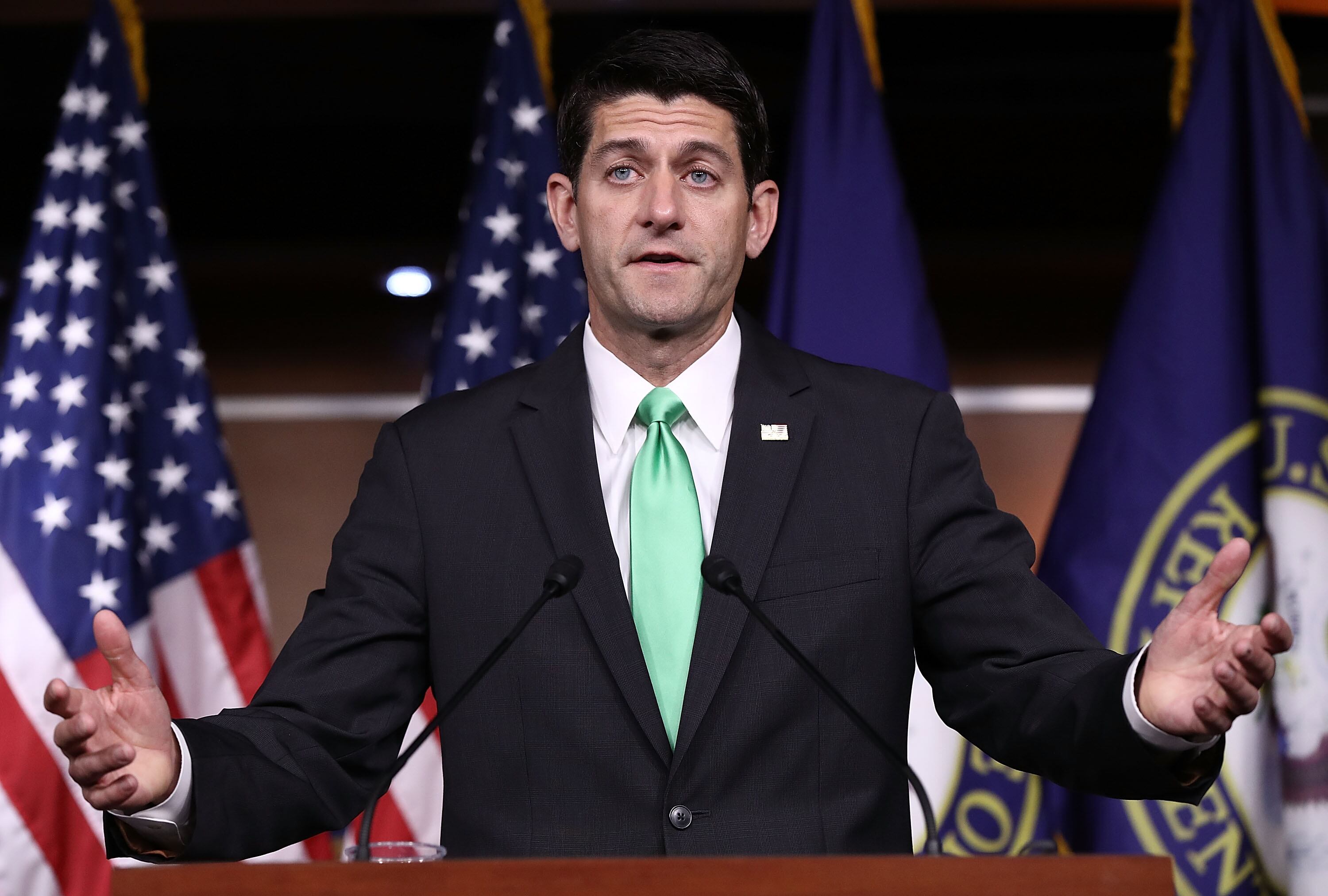
At a House Republican conference meeting Friday morning, House Speaker Paul Ryan, R-Wis., voiced a strategy of passing security-related appropriations bills and relegating domestic spending to a year-long CR, one Republican told reporters afterward.
Senate Democrats have been blocking individual defense-related appropriations bills for fear of just such a scenario, and some Republican lawmakers balked as well on Friday, speaking in favor of "minibuses" and a short-term CR. No final decisions were made at the meeting.
Speaking with reporters outside Friday's meeting, House Appropriations Chairman Harold Rogers, R-Ky., said a short-term continuing resolution is the most likely course. He acknowledged a long-term CR would "hamper" DoD and "waste money."
"They would have to continue funding things they no longer need, they would have no new starts of things they desperately need, like the construction of a new submarine," he said of the military.
When a House bill would emerge was unclear, as was the future for minibus spending legislation, Rogers said.
Whether the CR will be "clean" or include language to fund efforts to counter the disease Zika, or conservative-favored policy provisions like a moratorium on accepting Syrian refugees, are all part of the discussions.
House Appropriations Military Construction-Veterans Affairs Chairman Charlie Dent, R-Pa., warned the longer House lawmakers debate what he considered frivolous and politically charged policy provisions, the more likely they'll be saddled with a bill passed in the Senate.
"If the House dithers, and we have these circular firing squad discussions, the House will be jammed by the Senate, and we will eat whatever they send us," Dent said.
Dent favored packing the CR with his committee's appropriations bill, Zika funding and — if needed to satisfy Democrats — the energy and water appropriations bill. Other minibuses would also link defense and non-defense spending bills, such as the Pentagon appropriations bill with the labor, health and human services and education appropriations bill, Dent said.
On Sept. 7, Senate Majority Leader Mitch McConnell said he wants the Senate to pass a continuing resolution until Dec. 9 as early as next week. Such a move would in essence force the House to tag along on the Senate bill.
House Armed Services member Rep. Adam Kinzinger, R-Ill., said a short-term continuing resolution was the best among "a host of bad options" because it avoids a shutdown and gives lawmakers an opportunity to work out appropriations over the post-Nov. 8 election "lame duck" session.
"It gives us a shot at getting a shot at some regular order, maybe a minibus or two—maybe defense—and CR-ing the rest," Kinzinger said. "The minibus thing is probably where you'd probably get the most people in agreement and some success."
Senate and House Armed Services Committee leaders are in negotiations to reconcile each chamber's versions of the 2017 National Defense Authorization Act, where the biggest sticking point is the House bill's diversion of $18 billion in wartime overseas contingency operations funding for troops and equipment.
Thornberry, on Friday, signaled the NDAA negotiations on defense spending authorization could influence negotiations on a defense appropriations bill.
"We try to stay together with the authorization and appropriations, so I guess, yeah," Thornberry said.
Thornberry said he favors finalizing the NDAA before the end of September, and quipped the number of sessions to negotiate the bill, "depends on how long they'll take to agree with me."
Email: jgould@defensenews.com
Twitter: @reporterjoe
Joe Gould was the senior Pentagon reporter for Defense News, covering the intersection of national security policy, politics and the defense industry. He had previously served as Congress reporter.
Aaron Mehta was deputy editor and senior Pentagon correspondent for Defense News, covering policy, strategy and acquisition at the highest levels of the Defense Department and its international partners.
Valerie Insinna is Defense News' air warfare reporter. She previously worked the Navy/congressional beats for Defense Daily, which followed almost three years as a staff writer for National Defense Magazine. Prior to that, she worked as an editorial assistant for the Tokyo Shimbun’s Washington bureau.