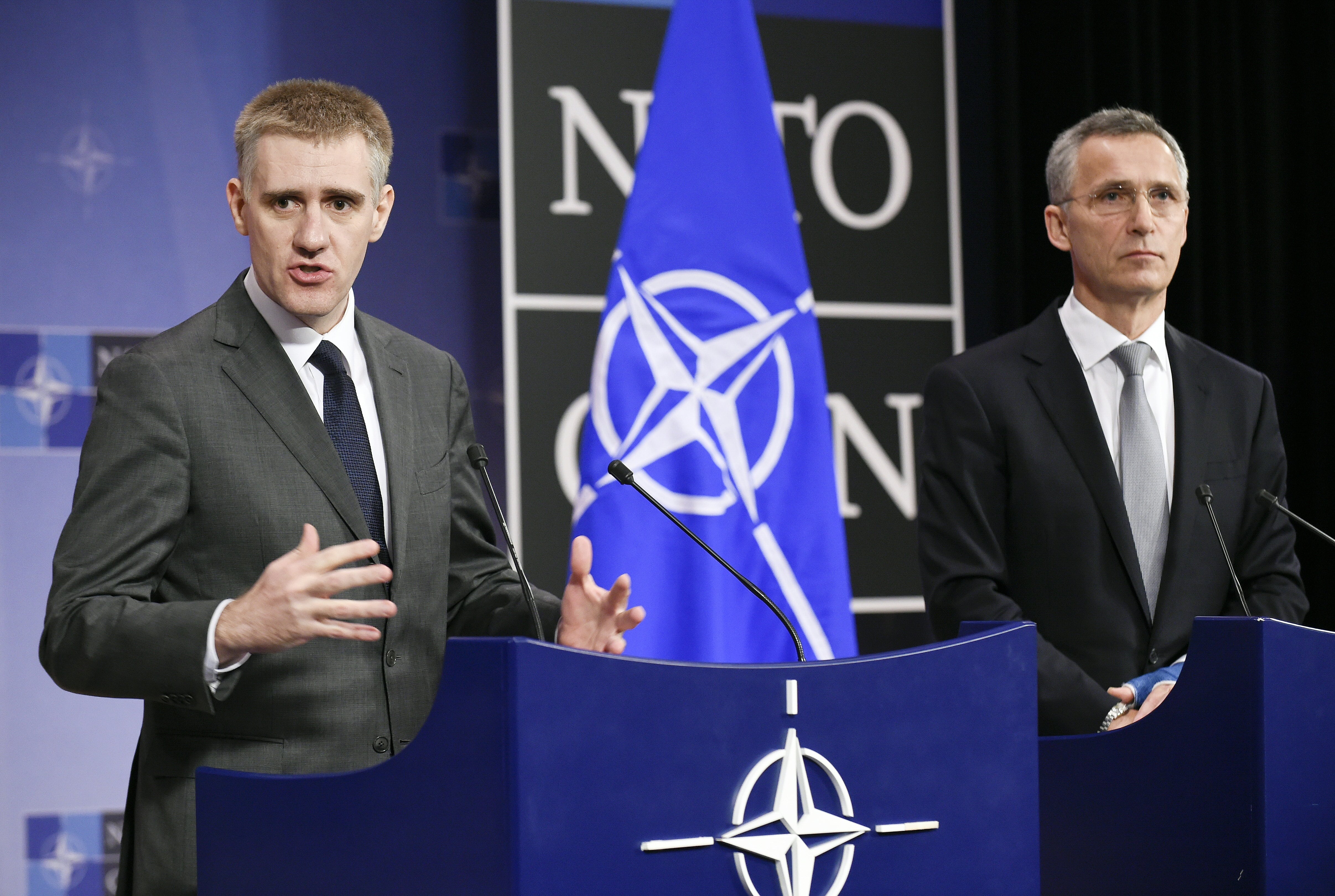
Montenegro has been given the green light to start negotiations on joining NATO, a decision heralded as "historic" by the alliance's Secretary General Jens Stoltenberg.
It secured an invitation to join the ranks of NATO member states, defying Russia's warnings it would have to respond to what it branded a threat to its security.
It also comes amid a mounting political crisis which has engulfed the country with Nebojsa Medojevic, leader of the Montenegrin opposition party Movement for Changes (PzP), saying, "The crisis is extremely deep and on the edge of serious instability, maybe even civil war."
Russia quickly said it would be forced to react to NATO's expansion eastward, with the invitation to the small Balkan country adding to bad blood between Moscow and the West over a host of issues including Ukraine.
But Montenegro's Foreign Minister Igor Luksic said the decision reflected the great efforts his country had made to modernize and meet western civil society norms.
"It is a great day for my country and for the alliance ... It is great news for the western Balkans, for its unity and security," Luksic said.
In a statement announcing the decision, Stoltenberg said, "We made a historic decision, the 28 NATO allies agreed to invite Montenegro to begin accession talks to join the alliance. This is a historic achievement."
He added, "Our decision reflects the reforms implemented by Montenegro, and the commitment it has shown to our common values and to international security. NATO membership for Montenegro will strengthen security in the region and for the alliance as a whole.
"We look forward to taking forward the accession talks, signing the accession protocols and concluding the ratification process without delay. During the period leading up to accession, NATO will involve Montenegro in alliance activities, including the Warsaw summit, to the greatest extent possible."
However, Stoltenberg also cautioned, "We expect further progress on reform to be pursued, especially in the area of the rule of law, before and after accession, in order to enhance Montenegro's contribution to the alliance."
NATO, he said, will continue to provide support and assistance, including through the Membership Action Plan (MAP).
Stotlenberg said NATO's "door is open" to all European democracies which "share the values of our alliance" and which are "willing and able" to assume the responsibilities and obligations of membership.
The NATO chief said the invitation to Montenegro should "provide guidance for other aspirants," adding, "We look to them to take the steps necessary to advance their aspirations."
Montenegro, a Balkans country of just over 600,000 people, won its independence in 2006 following the bloody break-up of what was Yugoslavia and the end of a federation with Moscow's long-time ally Serbia.
Its army has 2,000 soldiers, and it has contributed 25 soldiers to the NATO-led mission in Afghanistan since 2010.
The NATO invitation comes amid fears of increased Russian military activities in Ukraine and Eastern Europe. The decision is likely to impact on the country's relations with Serbia, Moscow's leading ally in the Balkans.
Bosnia and Herzegovina, Georgia, and the former Yugoslav republic of Macedonia are also making moves towards NATO membership.
Earlier this year, Montenegro's deputy Prime Minister Dusko Markovic said the current unconventional military threats in Europe and the Middle East indicate that Montenegro is on the right path in its bid to join NATO.
He said, "Our region and our country could be threatened by such modern challenges, which are unpredictable."
US Secretary of State John Kerry meanwhile played down any threat to Russia from NATO, which has responded to the Ukraine conflict with a military upgrade to reassure nervous ex-Soviet states they need not fear a more assertive Russia.
The decision to start accession talks comes despite a recent escalation of the crisis currently gripping the country which has seen Montenegro's police use teargas to disperse hundreds of anti-government protesters outside the parliament building in the capital Podgorica.
Under-fire Premier Milo Djukanovic has been unwilling to relinquish political power since first becoming Prime Minister in 1991. Currently serving his fourth term as Prime Minister, he first served as Prime Minister from 1991 to 1998, then as President of Montenegro from 1998 to 2002 and as Prime Minister again from 2003 to 2006 and from 2008 to 2010.
Martin Banks covered the European Union, NATO and affairs in Belgium for Defense News.